
The Ultimate Guide to Effective Student Notes
Taking Effective Student Notes is one of the most powerful skills a student can master. Not only do well-organized notes help you retain information, but they also make studying for exams, completing assignments, and participating in class discussions significantly easier. Whether you’re in high school, college, or pursuing online learning, understanding how to create, organize, and utilize notes efficiently can transform your educational experience. This guide will walk you through proven strategies, techniques, and tools for taking notes that truly stick.
Why Student Notes Matter
Effective Student Notes Many students underestimate the value of well-crafted notes. Notes are more than just a transcription of what a teacher says or what’s in a textbook—they’re a personalized roadmap of your learning journey. Studies show that students who actively engage in note-taking retain information longer and understand concepts more deeply. Effective notes encourage critical thinking, improve focus, and allow for quicker review sessions, especially during high-pressure periods like finals week.
The key to powerful note-taking is not merely writing everything down but capturing the essence of the information in a way that makes sense to you. This process strengthens memory retention and helps you synthesize complex topics into digestible chunks.

Types of Notes and Their Benefits
Different note-taking methods cater to different learning styles. Understanding which type of notes works best for you is essential.
1. Outline Method
The outline method is one of the most traditional approaches, involving hierarchical structuring of information. Main topics are written at the left margin, with subtopics and supporting details indented underneath. This method is excellent for subjects with clear, structured content such as history, biology, or literature.
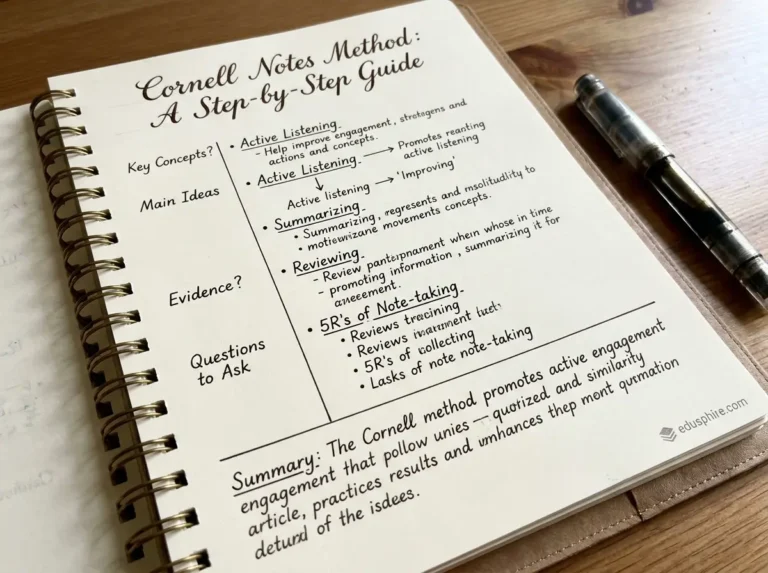
2. Cornell Notes
Developed at Cornell University, this system divides your paper into three sections: cues, notes, and summary. The main note area captures the bulk of information, the cue column is for keywords or questions, and the summary section at the bottom reinforces understanding. This method promotes active learning and reflection, making it ideal for review before exams.
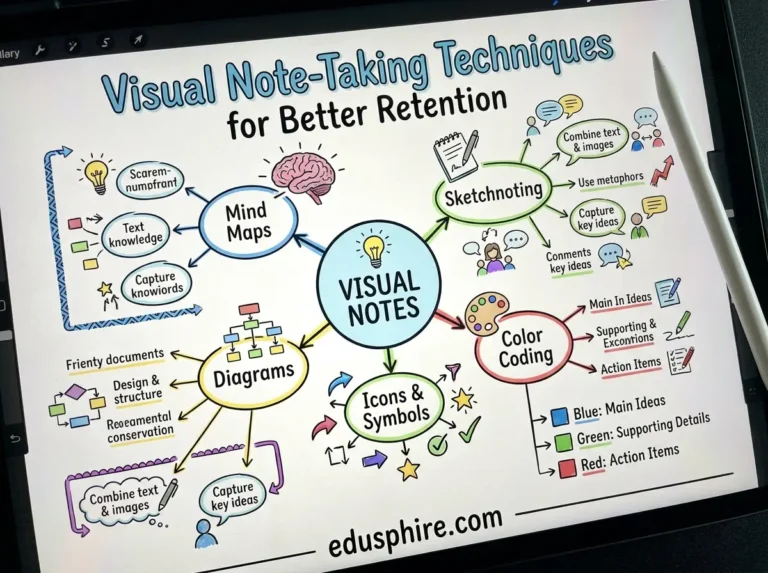
3. Mind Mapping
Mind maps visually connect ideas around a central concept, using branches to represent subtopics. This method is particularly effective for creative subjects or complex concepts requiring relationship mapping, such as psychology, marketing, or physics.
4. Charting Method
Charting organizes information into tables or columns, making it easy to compare and contrast data. This technique works well for classes like statistics, economics, or chemistry, where information is data-heavy and analytical.
5. Sentence Method
The sentence method involves writing every new thought or fact on a separate line. This style is straightforward and works for fast-paced lectures but may require later refinement to organize information logically. Read about Create a Study Plan That Fits Your Lifestyle.

Strategies for Taking Effective Notes
Taking notes is an active process, not a passive one. These strategies ensure your notes are both meaningful and memorable.
Focus on Key Concepts
Avoid the temptation to write down everything. Instead, identify main ideas, supporting details, and critical examples. Focused notes allow for quicker review and better retention.
Use Your Own Words
Translating complex information into your own words enhances comprehension. Paraphrasing also makes your notes more relatable and easier to recall during exams.
Incorporate Visuals
Diagrams, charts, and symbols can turn dry information into a visual story. Visual elements help with memory recall and make studying less monotonous.
Highlight and Color-Code
Using colors or underlining key terms can make your notes visually appealing and easier to navigate. However, avoid overdoing it; too many colors can be distracting.
Review and Revise Regularly
Notes are most effective when revisited. Daily or weekly reviews strengthen memory retention and highlight areas that need clarification.
Use Abbreviations and Symbols
Develop shorthand for frequently used terms. Symbols like arrows, stars, and bullet points save time and help you capture information efficiently.

Digital vs. Traditional Notes
Modern students often face the decision of whether to take notes digitally or on paper. Each has unique advantages.
Digital Notes
Digital note-taking apps, such as Microsoft OneNote or Evernote, allow for easy organization, searchability, and syncing across devices. They are ideal for students who prefer typing, need multimedia integration, or collaborate frequently with classmates.
Traditional Handwritten Notes
Writing by hand has cognitive benefits, as it encourages deeper processing of information. Handwritten notes often improve memory retention and comprehension, especially for subjects requiring conceptual understanding rather than data retrieval.
Combining both approaches can be powerful—take initial notes by hand to enhance learning, then digitize them for review and organization.
Tools and Apps for Modern Students
The right tools can make note taking faster, smarter, and more effective. Some popular options include:
- Microsoft OneNote: Organizes notes into notebooks, sections, and pages.
- Notion: A versatile platform for note-taking, task management, and knowledge organization.
- Evernote: Supports multimedia notes, search functions, and cross-device syncing.
- Quizlet: Allows you to convert notes into flashcards for active recall practice.
- GoodNotes (iPad): Ideal for handwritten notes and annotation of PDFs.
Choosing the right tool depends on your learning style, device preferences, and course requirements.
Organizing Notes for Maximum Efficiency
Effective Student Notes organization is key to studying efficiently. Here’s how to structure your notes for long-term use:
Use Consistent Formatting
Maintain a uniform format across all notes. Consistent headings, indentation, and numbering help your brain recognize patterns and make review sessions faster.
Date and Label Notes
Always label your notes with the date and topic. This habit makes it easy to locate specific content later, especially when preparing for exams or assignments.
Summarize Regularly
End each lecture or study session with a brief summary. This practice reinforces understanding and creates a condensed version of your notes for quick review.
Separate Subject Notebooks
Keep notes for different subjects in separate notebooks or digital folders. This prevents mixing concepts and allows for a focused study session.
Techniques to Enhance Retention
Taking notes is only half the battle; retaining that information is equally important.
Active Recall
After taking notes, close your book and try to recall key points. Writing or speaking what you remember strengthens neural pathways and improves long-term retention.
Spaced Repetition
Review your notes at increasing intervals over time. This method combats the forgetting curve and ensures knowledge stays fresh.
Teach What You Learn
Explaining concepts to others is a highly effective way to internalize information. Study groups, tutoring, or even recording yourself can reinforce learning.
Use Mnemonics
Mnemonic devices, acronyms, and rhymes make complex information easier to remember. They are especially useful for memorizing dates, formulas, or sequences.
Common Mistakes to Avoid
Even the best students can make note-taking errors. Awareness of these pitfalls can help improve your efficiency:
- Writing everything down verbatim without processing.
- Neglecting to review notes regularly.
- Using inconsistent or unclear formatting.
- Ignoring the power of visual aids.
- Failing to integrate notes with active recall or spaced repetition.
Avoiding these mistakes ensures your notes are not just a record of information but a tool for true understanding.

Adapting Notes for Different Learning Environments
Each learning environment may require a slightly different note-taking approach.
In-Person Lectures
Focus on listening and identifying key points. Use shorthand and abbreviations to keep pace with the lecturer.
Online Classes
Digital notes work well here. Utilize screenshots, recorded lectures, and embedded links to capture multimedia content.
Group Study
Collaborative note-taking can help fill gaps. Compare notes with peers to gain different perspectives and enhance comprehension.
Self-Study
When studying independently, organize notes around questions you want to answer. This active approach engages critical thinking and problem-solving skills.
Turning Notes into Study Power
The ultimate goal of note-taking is to create a resource that boosts your study efficiency. Here’s how to maximize the value of your notes:
- Convert notes into flashcards for active recall practice.
- Use summaries to create cheat sheets for quick review.
- Integrate diagrams and charts into your study sessions.
- Reorganize notes periodically to ensure clarity and relevance.
By consistently applying these methods, your notes become more than just documentation—they become an indispensable study tool.
Final Thoughts
Note-taking Mastering the art of effective student notes is a gamechanger. By understanding different methods, applying strategies, and regularly reviewing your notes, you can improve comprehension, retention, and academic performance. Whether you prefer digital tools or traditional pen and paper, the key is to engage actively with your learning material. Good notes don’t just help you pass exams—they empower you to truly understand and retain knowledge, giving you a lifelong advantage in education and beyond.
Invest time in crafting your notes today, and your future self will thank you for the clarity, organization, and academic confidence they provide.