
How to Take Effective Lecture Notes in College: Proven Strategies for Better Grades
Effective lecture notes in college lectures move fast, and professors expect you to absorb and interpret information on the fly. If you’re like most students, you’ve probably struggled to keep up, missed key points, or stared at your notebook wondering, “Did I really write this?”
Effective lecture notes are more than a record of what was said — they’re a tool for learning, comprehension, and test preparation. In this guide, we’ll break down practical, research‑based strategies for taking better lecture notes so you spend less time re‑learning content and more time mastering it.

Effective Lecture Notes in College
read bellow how to create Effective Lecture Notes in College.
1. Why Effective Lecture Notes in College matter?
Effective Lecture Notes in College are the backbone of your study routine. They help you:
- Increase comprehension: Writing helps your brain process and internalize information.
- Remember key concepts: Well‑organized notes improve memory recall.
- Prepare for exams: Notes simplify review and eliminate guesswork.
- Stay engaged: Taking notes keeps your mind focused and attentive.
In fact, research shows that students who take organized notes perform better on tests than those with scattered or incomplete 10 notes taking tips.
2. Prepare Before the Lecture
Review the Syllabus and Assigned Readings
Skimming the assigned chapter or lecture slides before class gives you context, helping you:
- Identify vocabulary
- Understand the lecture structure
- Create expectations for key points
This “pre‑learning” primes your brain to notice important details and improves note accuracy.
3. Choose the Best Effective Lecture Notes Taking Method
There’s no universal method for everyone, but here are three of the most effective strategies:
✏️ 3.1 The Cornell Method
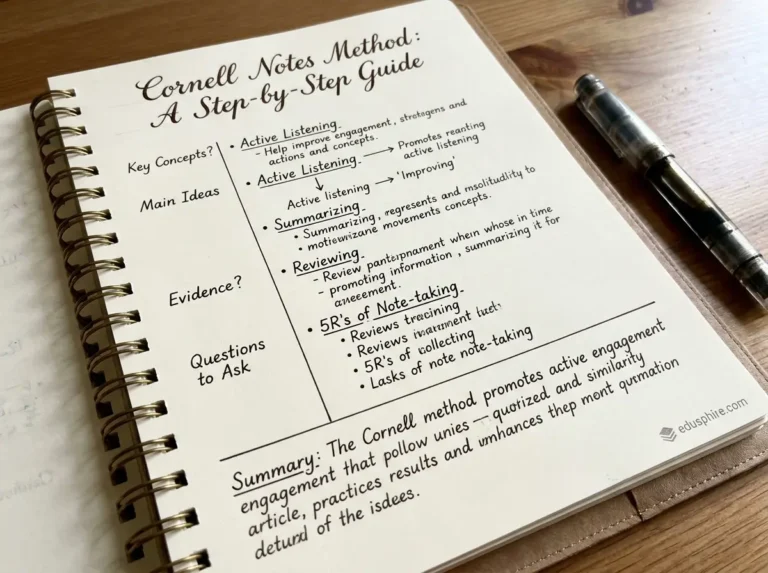
The Cornell method divides your page into:
- A Cue Column (left side) for keywords/questions
- A Note‑Taking Area (main space) for lecture content
- A Summary Section at the bottom
This method makes review and self‑testing easier, especially before exams.
🗂️ 3.2 The Outline Method
This is one of the easiest methods to master. Structure your notes using:
- Main topics
- Subtopics
- Supporting details
- Examples
- Subtopics
Outlines reflect lecture organization and help you connect ideas logically.
🧠 3.3 Mind Mapping
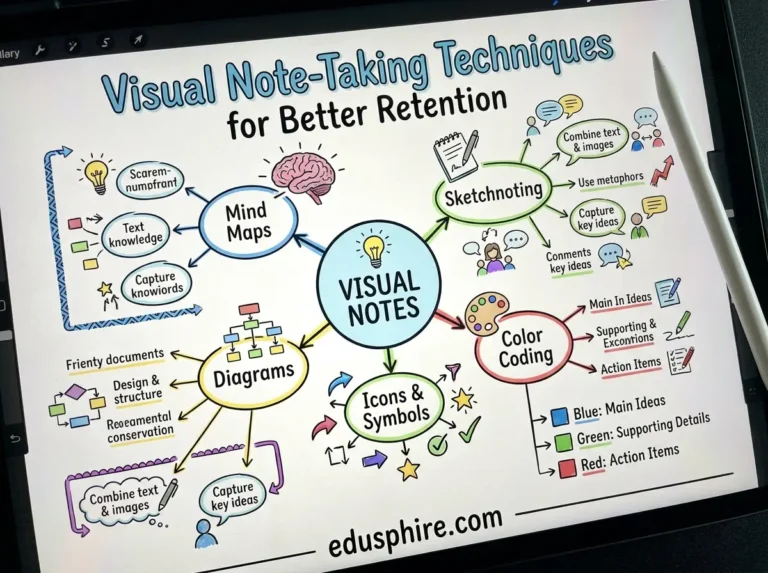
Mind maps are great for visual learners. Start with a central topic and branch out with lines, colors, and keywords. This method works well for:
- Brainstorming
- Reviewing conceptual relationships
- Visual retention
4. What to Write — And What to Skip
Effective notes are concise but complete. Here’s what to prioritize:
Write down:
- Definitions
- Processes/steps
- Dates and formulas
- Examples
- Anything the professor repeats or writes on the board
Skip:
- Long verbatim sentences
- Irrelevant chatter or off‑topic discussions
- Words that don’t aid understanding
Tip: Use abbreviations (e.g., “w/” for “with,” “→” for “leads to”) to save time.
5. Active Listening is Key
Good notes start with focused listening. To stay active in lecture:
- Sit where you can hear and see clearly
- Avoid distractions (phone, laptop unrelated apps)
- Anticipate transitions — professors often signal key points
- Ask questions when allowed
Remember: notes aren’t just recording — they’re processing.
6. Use Technology Wisely
Digital note‑taking tools like Notion, OneNote, Google Docs, or Evernote can level up your notes. These tools allow:
- Searchable text
- Easy organization
- Multimedia integration (images, videos, links)
- Syncing across devices
Pro tip: If you type notes, still listen actively — don’t merely attempt to transcribe every word.
7. Combine Notes With Visual Aids
Visuals help the brain remember faster. Try:
- Flow charts
- Diagrams
- Timelines
- Tables
Visual learning works exceptionally well for complex topics like biology, history, or economics.
8. Review and Revise Your Notes Promptly
Your brain solidifies information best within 24 hours. After class:
- Review notes within the same day
- Fill in missing details
- Clarify confusing points
- Highlight important sections
A quick review improves retention by about 50%.
9. Study With Purpose — Make Notes Work For You
Effective note‑taking isn’t done in isolation — it’s part of a study system:
Use active recall
Cover a section of your notes and test yourself.
Teach someone else
If you can explain it, you know it.
Create practice questions
Turn key points into quiz questions for deeper study.
10. Group Note‑Taking and Collaboration
Studying with peers strengthens your understanding. Benefits include:
- Filling knowledge gaps
- Sharing insights
- Comparing perspectives
- Combining notes
Just remember to stay focused — group sessions should be structured.
11. How to Handle Fast Lectures
In fast‑paced classes:
- Write short keywords, not full sentences
- Use bullet points
- Draw arrows and diagrams
- Ask for slides or follow‑up materials
If the professor provides slides, use them as a framework — just add context in your notes.
12. The Power of Consistency
The best note‑taking system works only if you use it consistently. Prioritize:
- Keeping all lecture notes in one place
- Using the same method per class
- Updating notes regularly
Consistency reduces confusion and improves study efficiency.
13. Common Mistakes — And How to Avoid Them
❌ Writing everything verbatim
👉 Instead, process ideas and summarize them.
❌ Leaving gaps
👉 Use placeholders like “?” and fill them later.
❌ Not reviewing notes
👉 Schedule daily or weekly review sessions.
❌ Disorganized notes
👉 Assign titles and dates for easy retrieval.
Final Thoughts
College success isn’t just about intelligence — it’s about strategy. and Effective Lecture Notes in complex ideas, improve memory, Make studying easier and Lead to better grades.
If you implement the techniques above, your academic performance will improve — not by chance, but by design.
Start today. Review your next lEffective Lecture Notes in College with purpose, organize them with intent, and make your study time truly effective.