
10 Note Taking Tips Every Student Should Try
10 Note taking tips every student should try the most essential skills every student can develop. Whether you are attending college lectures, high school classes, or online courses, the way you record and organize information can significantly impact your learning, retention, and academic performance.
In this article, we’ll explore 10 note-taking tips every student should try, backed by strategies that help you stay focused, organized, and prepared for exams and assignments. visit edusphire for more.
Why 10 Note Taking Tips Every Student Should Try Matters
Many students underestimate the importance of good note-taking. Simply writing down what the teacher says is not enough. Effective notes help you:
- Improve retention: Engaging actively with information while taking notes helps store it in long-term memory.
- Stay organized: Structured notes make reviewing easier and more efficient.
- Boost productivity: Well-organized notes reduce the time spent searching for key concepts.
- Enhance understanding: Summarizing and paraphrasing encourages deeper comprehension.
Now that we know why it matters, let’s dive into the tips that can transform your study routine.

1. Choose the Right Note-Taking Method
Different students have different learning styles, so it’s important to find a method that works for you. Some popular techniques include:
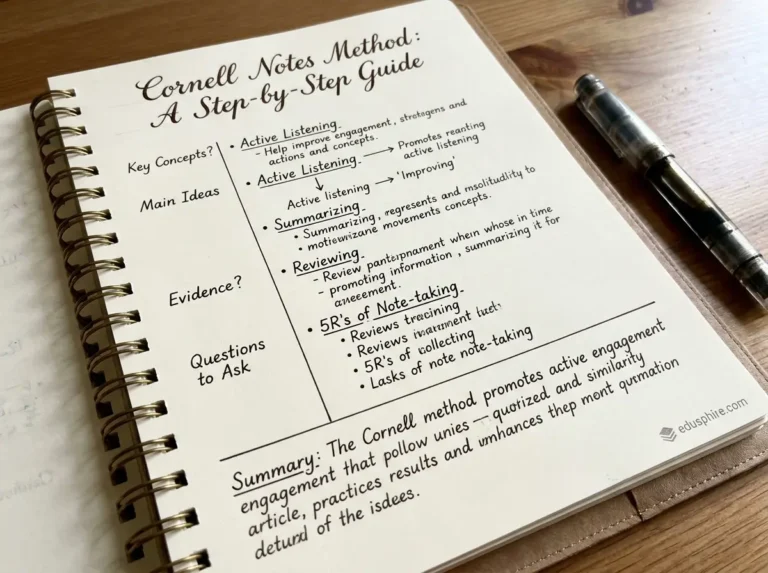
- Cornell Method: Divide your page into three sections – cues, notes, and summary. Helps with review and self-testing.
- Outline Method: Organize information hierarchically with main points, subpoints, and details. Great for structured lectures.
- Mapping Method: Create visual diagrams connecting ideas. Useful for visual learners and complex topics.
- Charting Method: Use tables to compare concepts, dates, or formulas. Effective for subjects like history or science.
- Sentence Method: Write every idea in a separate line. Helpful when lectures move quickly.
Experiment with different techniques to see which one enhances your comprehension and retention the most.

2. Be Prepared Before Class
Effective 10 Note taking tips every student should try starts before the lecture begins. Preparation helps you focus on understanding rather than just copying information.
- Review the syllabus: Know what topics will be covered.
- Read assigned materials: Familiarity with the subject allows you to anticipate key points.
- Gather materials: Bring notebooks, pens, highlighters, or digital devices ready for organized note-taking.
- Set goals: Decide whether you are taking notes for understanding, exam prep, or assignments.
Being prepared saves time and increases the value of your notes.
3. Focus on Key Points, Not Everything
Many students make the mistake of writing down every word the teacher says. Instead:
- Listen actively and identify main ideas, definitions, and examples.
- Use abbreviations, symbols, or shorthand to take notes faster.
- Highlight or underline critical terms or formulas.
- Summarize concepts in your own words for better retention.
This approach ensures that your notes are concise and focused, making them more useful during study sessions.
4. Use Visual Aids and Diagrams
Visual learners benefit greatly from incorporating diagrams, charts, and other graphics into their notes.
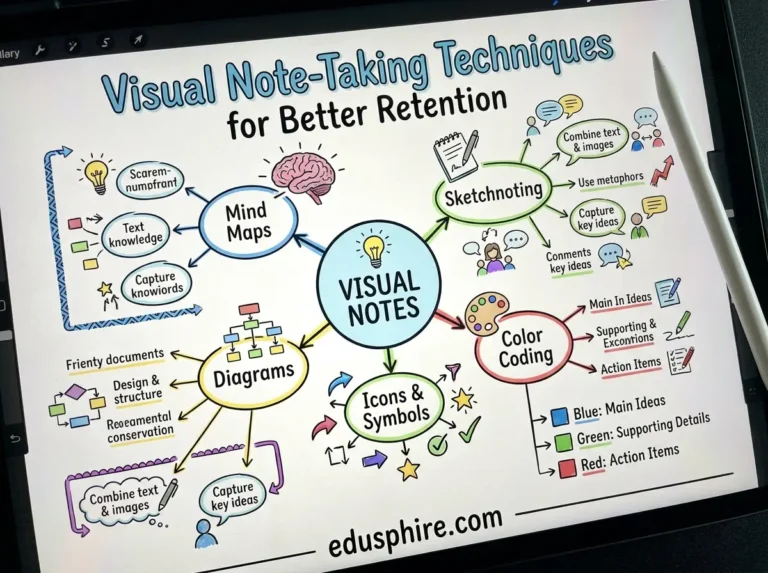
- Mind maps: Show the relationship between concepts.
- Flowcharts: Illustrate processes or sequences.
- Graphs and tables: Present data clearly and logically.
- Highlighting and color-coding: Emphasize important points and categories.
Adding visuals to your notes makes reviewing more engaging and helps reinforce memory.
5. Keep Notes Organized
Disorganization can make notes ineffective. Follow these strategies:
- Date each entry: Helps track lessons chronologically.
- Use headings and subheadings: Clearly separate topics for quick reference.
- Number or bullet key points: Increases readability.
- Store digital notes in folders: Tools like OneNote, Evernote, or Google Docs make it easy to organize by subject or topic.
Well-structured notes save time when revising for exams.
6. Review and Revise Notes Regularly
Taking notes is only half the battle. Regular review is essential for retention.
- Daily review: Spend 5–10 minutes reviewing notes after class.
- Weekly summary: Create a condensed version highlighting only the most important points.
- Active recall: Test yourself by covering your notes and trying to recall information.
- Teach someone else: Explaining concepts aloud reinforces understanding.
Consistent revision strengthens memory and prepares you for exams.
7. Integrate Digital Tools
Digital note-taking tools can make your study sessions more efficient and interactive:
- Evernote: Organize notes with tags and notebooks.
- OneNote: Supports multimedia, including audio and video recordings.
- Notion: Combines notes, tasks, and calendars in one workspace.
- Quizlet: Turn notes into flashcards for easy practice and testing.
Digital tools also allow you to search and edit notes easily, which is especially helpful for long-term study projects.
8. Don’t Forget to Leave Space
Leaving blank space in your notes may seem counterintuitive, but it’s extremely useful:
- Add details later: Teachers often provide additional explanations after class.
- Insert questions: Space allows you to write questions for follow-up or self-testing.
- Enhance clarity: Avoid cluttered notes that are hard to read.
A clean, well-spaced layout makes revisiting notes less stressful and more productive.
9. Use Active Listening
Your ability to take effective notes depends on how well you listen and process information during lectures.
- Focus fully on the speaker: Avoid distractions like phones or unrelated tabs.
- Identify verbal cues: Phrases like “This is important” or “Remember that” often signal key points.
- Ask questions: Clarify confusing topics immediately or jot them down to follow up later.
- Summarize aloud: Rephrasing concepts in your mind improves comprehension.
Active listening ensures your notes capture the essence of the lesson.
10. Customize Notes to Your Learning Style
Every student is unique, so adapt note-taking strategies to fit your learning style:
- Visual learners: Incorporate color coding, diagrams, and charts.
- Auditory learners: Record lectures or read notes aloud.
- Kinesthetic learners: Use flashcards, write summaries by hand, or act out concepts.
- Reading/Writing learners: Rewrite notes and summarize key points in your own words.
Customizing your approach makes learning more effective and enjoyable.
Bonus Tips for Maximum Effectiveness
Here are a few extra strategies to enhance your note-taking even further:
- Stay consistent: Develop a regular note-taking habit.
- Avoid multitasking: Focus on one subject at a time for higher retention.
- Combine methods: Mix outlining, mapping, and visuals for complex topics.
- Use mnemonics: Memory aids like acronyms and rhymes can help with difficult concepts.
- Keep it simple: The simpler your notes, the easier they are to revise.
Conclusion
10 note taking tips every student should try can develop with practice. By using the right methods, staying organized, reviewing regularly, and customizing your approach, you can improve comprehension, retention, and academic performance.
Implement these 10 Note taking tips every student should try into your daily study routine and notice the difference in your learning efficiency.
Remember, the goal is not just to record information, but to understand, retain, and apply it. Start experimenting with these strategies today and make your study sessions more productive and enjoyable.