

Bullet Journaling for Students: Organize Your Classes
Bullet Journaling for Students In today’s fast-paced academic life, students in the United States are constantly juggling classes, assignments, extracurricular activities, and social commitments. With so many responsibilities, staying organized can feel overwhelming. This is where bullet journaling comes in—a flexible and creative method that helps students take control of their schedules, track their goals, and manage tasks efficiently.
Bullet journaling is more than just a pretty notebook. It is a customizable system that allows you to plan, prioritize, and reflect on your academic journey. Unlike traditional planners, bullet journals adapt to your unique needs, making them perfect for students who want both structure and creativity. In this guide, we’ll explore everything students need to know about bullet journaling, how to get started, and strategies for organizing classes, assignments, and study routines effectively.
What Is Bullet Journaling?
Bullet journaling, often called BuJo, is a method of note-taking and planning developed to combine organization, productivity, and personal reflection. A bullet journal uses simple symbols, lists, and sections to track tasks, events, and notes in one place.
At its core, bullet journaling uses bullets (dots, circles, and other symbols) to differentiate tasks, events, and notes. Students can create sections for daily schedules, weekly goals, class assignments, and study checklists. The system is flexible, allowing each student to tailor it to their unique academic needs and personal preferences.
The beauty of bullet journaling lies in its versatility. Students can incorporate trackers for grades, reading lists, exam prep, or even self-care routines. It transforms chaotic academic life into a structured and visually appealing format that encourages productivity without feeling rigid. Read Visual Note-Taking Techniques for Better Retention.

Why Students Should Use Bullet Journals
Students face a multitude of challenges, including balancing multiple classes, meeting deadlines, and preparing for exams. Bullet journaling provides a practical solution to these challenges.
Firstly, bullet journals help with time management. By keeping track of assignments, due dates, and class schedules, students can plan ahead and avoid last-minute stress. They also make it easier to visualize workloads, allowing students to allocate sufficient time for studying, projects, and extracurricular activities.
Secondly, bullet journaling encourages reflection. Students can review their progress at the end of the week, identify patterns in productivity, and adjust their routines accordingly. This promotes self-awareness, a crucial skill for academic success.
Finally, bullet journaling fosters creativity and personalization. Students can design layouts that inspire them, use color coding for different classes, and create visually engaging spreads that make staying organized enjoyable rather than tedious.
Getting Started with Bullet Journaling
Starting a bullet journal does not require expensive supplies or extensive planning. A simple notebook, pen, and a few markers are enough to begin.
Choose a notebook that suits your style and schedule. Some students prefer dotted notebooks for flexibility, while others use grid or lined notebooks. Select a pen that writes smoothly and does not smudge, as neat writing enhances readability and motivation.
Next, create a simple index page at the beginning of your journal. The index allows you to keep track of page numbers and topics, making it easy to find information quickly. Even in a 2026 classroom setting, students find the index invaluable for reviewing lecture notes and assignment pages efficiently.
Once your index is ready, you can set up the core sections of your bullet journal, including monthly calendars, weekly spreads, and daily logs. These sections provide a framework for organizing classes, assignments, and personal tasks.
Setting Up Your Academic Calendar
One of the first steps in bullet journaling for students is creating an academic calendar. This calendar provides a snapshot of the semester, highlighting key dates such as exams, project deadlines, and holidays.
Start by drawing a monthly calendar spread. Include all your classes, assignments, and important deadlines. Use color coding to differentiate between classes, extracurricular activities, and personal events. This visual separation helps students quickly identify priorities at a glance.
In addition to the monthly calendar, consider creating a semester overview. This can include long-term goals, major projects, or exams. By mapping out the entire term, students can anticipate busy periods and allocate time for focused study sessions.
Bullet journaling makes it easy to adjust calendars dynamically. If a class schedule changes or a project deadline shifts, you can update your journal without starting over. This flexibility ensures that your planning remains accurate and reliable throughout the semester.
Daily and Weekly Logs
Daily and weekly logs are the heart of bullet journaling. These sections provide space to plan day-to-day tasks, track class schedules, and manage study sessions.
Start by creating a weekly log at the beginning of each week. Include a section for each day, listing classes, homework, and appointments. Consider adding small habit trackers for daily activities, such as exercise, reading, or study hours.
Daily logs allow students to break down tasks into manageable chunks. For example, if you have a biology lecture, your daily log might include reviewing the chapter, taking notes, and completing related assignments. By writing down tasks clearly, students can focus on one step at a time and reduce the stress of multitasking.
Using symbols in your logs makes task management more efficient. For instance, a filled bullet can represent a completed task, a circle can indicate an event, and a dash can signify a note or reminder. This system allows students to quickly scan their pages and track progress effectively.
Organizing Classes
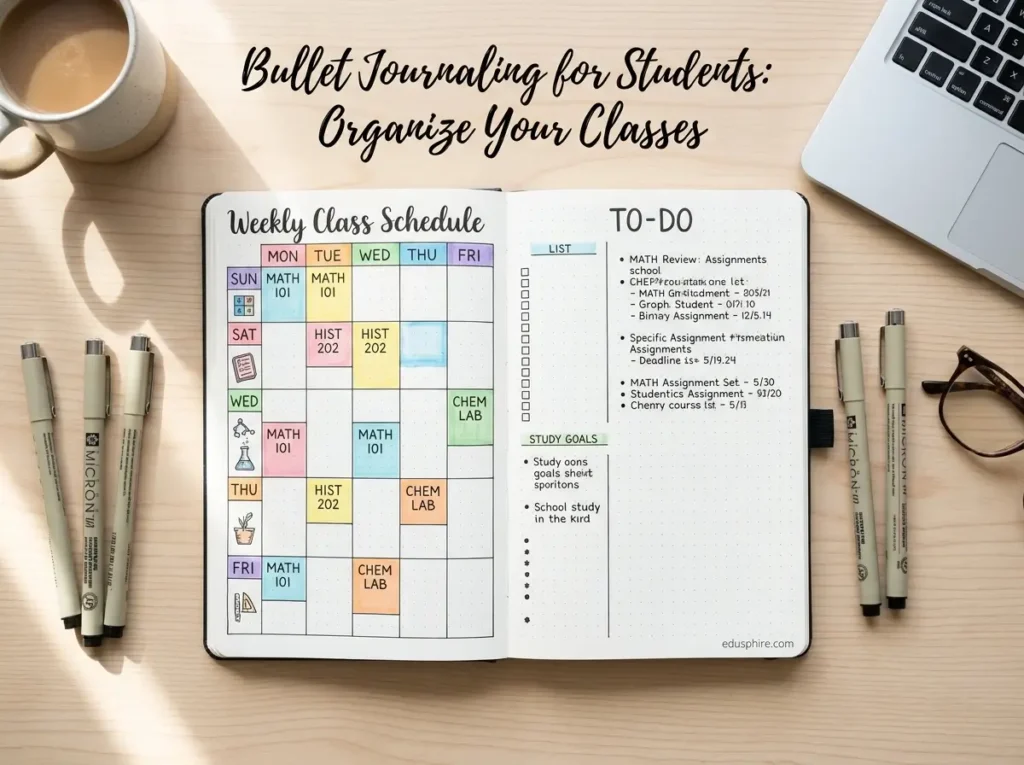
Bullet journaling is especially helpful for organizing multiple classes. Students can create dedicated sections for each course, including lecture notes, reading lists, and assignments.
Consider creating a master class list at the beginning of the semester. Include the course name, professor, meeting times, and important deadlines. This overview allows students to quickly reference class information without searching through scattered materials.
For each class, create a separate section or color-coded tab in your journal. Track key topics covered in lectures, homework assignments, and upcoming exams. You can also add study tips, reminders for group projects, and key vocabulary or formulas.
By centralizing all class-related information in one place, students save time and reduce the likelihood of missing deadlines or forgetting critical information.
Tracking Assignments and Deadlines
One of the main benefits of bullet journaling is efficient assignment tracking. A dedicated section for assignments helps students prioritize tasks, manage time, and avoid last-minute cramming.
Create an assignment tracker with columns for the task name, due date, priority level, and completion status. Students can also include additional notes for each task, such as resources needed or key points to remember.
Color coding tasks by class or priority level provides visual clarity. For example, red can indicate urgent assignments, yellow for medium priority, and green for completed tasks. This method allows students to focus on what matters most at any given time.
Regularly updating your assignment tracker ensures that your bullet journal remains a reliable tool throughout the semester. Students who track tasks consistently often experience reduced stress and improved academic performance.
Study and Revision Planning
Bullet journals are excellent tools for planning study sessions and exam revision. Instead of last-minute cramming, students can create structured study schedules that ensure consistent progress.
Start by reviewing your academic calendar and assignment tracker. Identify upcoming tests, quizzes, and major projects. Then, allocate study sessions in your weekly log, breaking down material into manageable portions.
Include revision trackers for each subject. Students can mark completed chapters, topics reviewed, or practice problems solved. This visual representation of progress encourages consistency and provides motivation.
Bullet journaling also allows students to experiment with different study techniques. You can track methods like flashcards, summarizing notes, or practice tests and evaluate which strategies are most effective.

Habit and Goal Tracking
In addition to classes and assignments, bullet journaling supports habit and goal tracking. Students can monitor daily routines, wellness habits, and academic objectives in a structured way.
Create habit trackers for activities like exercising, reading, attending classes, completing homework, or practicing mindfulness. Checkboxes or small symbols can indicate daily completion.
Tracking habits promotes accountability and helps students identify patterns in productivity and focus. Over time, this reflection allows for adjustments to routines that improve overall efficiency.
For academic goals, students can set weekly or monthly objectives, such as mastering a topic, achieving a certain grade, or completing a project ahead of schedule. Bullet journaling ensures these goals remain visible and actionable.
Incorporating Creativity and Motivation
Bullet journaling is not just about productivity; it is also about creativity and motivation. Students can personalize their journals with doodles, quotes, stickers, or color schemes that inspire them.
Visual elements enhance engagement and make students more likely to use their journals consistently. Motivational quotes, for example, can encourage perseverance during challenging courses.
You can also create mood trackers, brain dump pages, or inspiration sections. These additions allow students to balance academic planning with personal reflection and stress management. A visually appealing journal becomes more than a tool—it becomes a source of inspiration.
Digital Bullet Journaling
While traditional paper journals are popular, digital bullet journaling is growing in popularity. Students can use apps like GoodNotes, Notability, or Microsoft OneNote to replicate the bullet journal system digitally.
Digital journals offer advantages like easy editing, searchable text, cloud storage, and integration with calendars or reminders. They are ideal for students who prefer typing over handwriting or want to include multimedia elements.
Despite the digital format, the principles of bullet journaling remain the same: organize tasks, track progress, and reflect on learning. Whether digital or paper, consistency is key to maximizing the benefits.
Common Mistakes Students Make
Many students struggle with bullet journaling at first. One common mistake is overcomplicating layouts. While creative spreads are fun, overly intricate designs can be time-consuming and reduce productivity.
Another mistake is inconsistency. A bullet journal only works if students update it regularly. Skipping daily or weekly entries can lead to disorganization and missed tasks.
Additionally, students sometimes focus too much on aesthetics rather than content. While beautiful pages are motivating, the main goal is effective planning, task management, and learning.
Finally, neglecting review sessions undermines the bullet journal’s purpose. Writing notes and tracking tasks is just one step; reviewing them regularly ensures real academic progress.
Tips for Successful Bullet Journaling
To get the most out of a bullet journal, students should focus on simplicity, consistency, and reflection. Start with basic layouts and gradually add sections as needed. Use symbols and color coding that make sense to you.
Set aside a few minutes each day or week to update your journal. Review upcoming deadlines, add new tasks, and check off completed items. Reflect on accomplishments, challenges, and areas for improvement.
Experiment with layouts, trackers, and spreads until you find a system that suits your classes, assignments, and personal preferences. Remember, bullet journaling is a tool, not a burden—it should enhance your academic life, not complicate it.
Benefits Beyond Academics
Bullet journaling is more than a student productivity tool. It also supports personal development, mental well-being, and creative expression. Students who maintain bullet journals often develop better time management skills, self-discipline, and organization habits that carry into adulthood.
Reflecting on goals, tracking habits, and visualizing progress can reduce stress and increase motivation. Many students report that bullet journaling helps them feel more in control of their lives, both inside and outside the classroom.
By incorporating bullet journaling into daily routines, students create a holistic system that balances academic, personal, and creative priorities.
Conclusion
Bullet journaling is a versatile and powerful method for students in the United States looking to organize their classes, track assignments, and manage their time effectively. By combining structure with creativity, bullet journals make it easier to stay focused, reduce stress, and achieve academic goals.
From setting up an academic calendar to creating daily logs, tracking assignments, and planning study sessions, bullet journaling offers a comprehensive system for learning and productivity. Habit tracking, goal setting, and reflection further enhance its benefits.
Whether you choose a paper notebook or a digital format, the key to successful bullet journaling is consistency, simplicity, and regular review. Students who adopt this method can experience improved organization, higher productivity, and a more balanced approach to academic life.
If you’re struggling with deadlines, multiple classes, or staying on top of assignments, bullet journaling is a proven system that can transform how you manage your studies. Start small, stay consistent, and watch your academic life become more organized and manageable.