How to Use Online Certifications to Boost Your Resume
Use Online Certifications to Boost Your Resume In today’s competitive job market, a traditional resume often isn’t enough to stand out. Employers are seeking candidates who demonstrate initiative, adaptability, and specialized skills. One of the most effective ways to showcase these qualities is through online certifications. These credentials validate your expertise, signal your commitment to professional development, and can help you gain an edge over other applicants. Whether you are entering the workforce, switching careers, or aiming for a promotion, online certifications can transform your resume from ordinary to exceptional.
This comprehensive guide Use Online Certifications to Boost Your Resume and explores how to strategically use online certifications to enhance your resume, highlight your skills, and increase your employability. By following these steps, you can make the most of your certifications and turn them into a powerful career tool.
Understanding the Value of Online Certifications
Use Online Certifications to Boost Your Resume has become a cornerstone of modern professional development. Unlike traditional degrees, they are often shorter, targeted, and accessible from anywhere. Completing a certification demonstrates your dedication to continuous learning and your ability to acquire practical, job-ready skills.
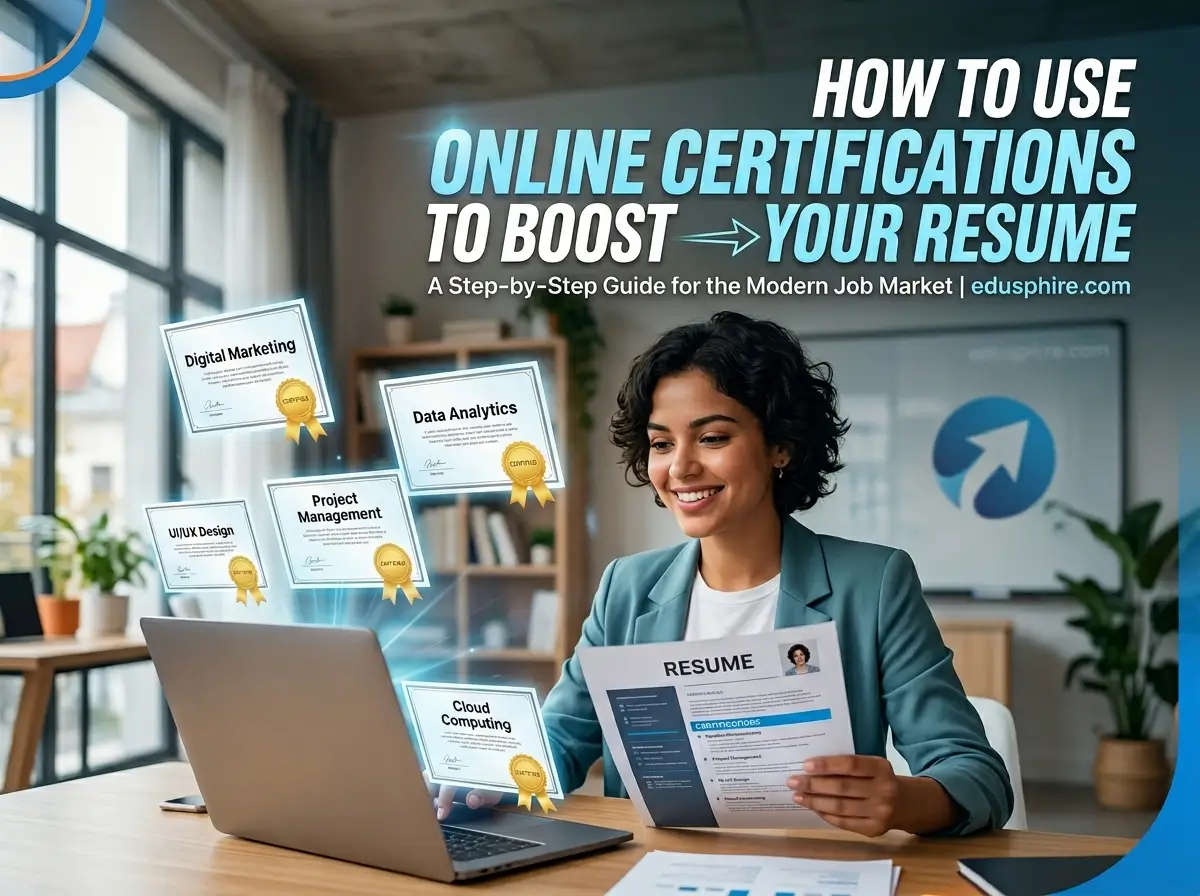
Employers recognize that certifications often indicate proficiency in specific tools, technologies, or methodologies. For instance, certifications in project management, digital marketing, data analytics, or cloud computing immediately signal to recruiters that you have the expertise necessary to contribute to their team. They also provide a quantifiable achievement that complements your work experience and education.
Beyond skill validation, online certifications can help you explore new fields without committing to a full degree program. They allow you to diversify your knowledge, adapt to industry trends, and strengthen areas where your resume may currently have gaps. For career changers, certifications provide a tangible way to show credibility in a new area. visit best study tips for student.
Step 1: Identify Your Career Goals
Before investing time in certifications, clarify your career goals. Ask yourself what positions you are targeting, which industries you are interested in, and what skills are most valued in your field. This clarity will help you select certifications that align with your aspirations and demonstrate relevance to potential employers.
Consider both short-term and long-term objectives. Are you aiming for an entry-level position, a promotion, or a career shift? Certifications can serve different purposes depending on your goals. For entry-level positions, they can complement your education. For mid-career professionals, they can showcase expertise or specialization. For those changing industries, certifications can provide the credibility needed to make the transition smoother.
Step 2: Research In-Demand Certifications
Not all certifications carry the same weight in the job market. Focus on credentials that are recognized by employers and are relevant to your industry. Popular fields for online certifications include technology, healthcare, business, finance, marketing, and project management.
Technology professionals, for instance, often pursue certifications in cloud computing, cybersecurity, or programming languages. Business professionals may benefit from project management certifications or courses in data analytics. Digital marketing certifications, social media strategy credentials, and SEO certifications are highly valuable for marketing roles.
Researching in-demand certifications ensures that your efforts will have a meaningful impact on your resume and career trajectory. Look for programs offered by reputable organizations, platforms, or universities, as these are more likely to be recognized and respected by employers.
Step 3: Choose Credible Platforms
The credibility of the certification platform can influence how employers perceive your qualifications. Reputable online learning platforms provide rigorous content, practical exercises, and assessments that genuinely demonstrate your knowledge.
Some of the most recognized platforms in the United States include Coursera, edX, LinkedIn Learning, Udemy, Google Career Certificates, and industry-specific organizations like PMI for project management or CompTIA for IT skills. Selecting a platform with strong brand recognition adds legitimacy to your certification and ensures that your resume carries weight with recruiters.
Step 4: Focus on Quality Over Quantity
While it may be tempting to accumulate multiple certifications quickly, quality matters more than quantity. Employers value certifications that are relevant, challenging, and demonstrate meaningful skills. One or two high-impact certifications can be far more persuasive than a long list of minor or generic credentials.
Prioritize certifications that enhance your core skills, align with your target role, and have clear, measurable outcomes. Certifications with practical projects, exams, or verified credentials provide more credibility than those that are purely self-paced or unverified. visit best study apps.
Step 5: Integrate Certifications Into Your Resume Strategically
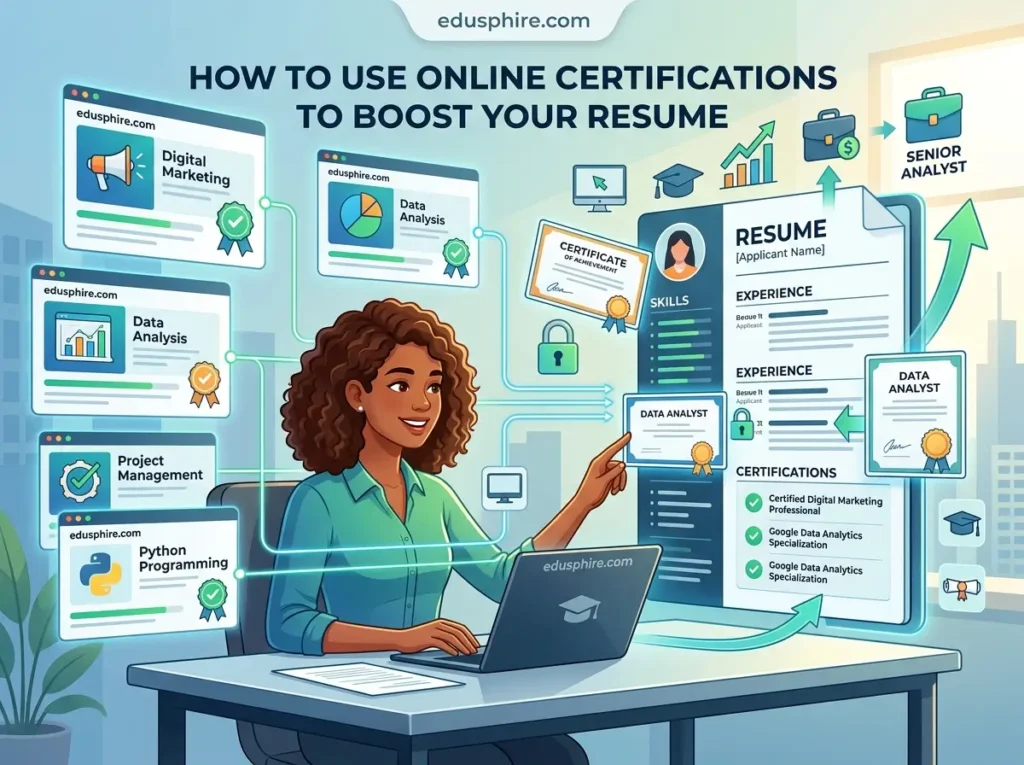
Simply completing a certification isn’t enough; it must be showcased effectively on your resume. Place it in a dedicated section labeled “Certifications” or “Professional Development” near the top of your resume if it is highly relevant to the position. Include the certification name, issuing organization, and completion date.
If the certification involved a practical project or skill demonstration, briefly note the competency gained or a key achievement. For example, instead of just listing “Google Data Analytics Certificate,” you could write, “Google Data Analytics Certificate – Developed expertise in SQL, Excel, and data visualization through real-world projects.”
Integrating certifications strategically ensures that recruiters immediately recognize the value you bring to the role and understand the practical skills you can contribute.

Step 6: Highlight Skills and Projects
Online certifications often include hands-on projects or exercises that demonstrate your abilities. Incorporating these into your resume or portfolio can provide tangible proof of your skills. Use Online Certifications to Boost Your Resume Describe specific projects, tools, or techniques you mastered and the results you achieved.
For example, a certification in digital marketing could include completing a campaign strategy project or creating a social media content plan. A coding certification could involve building a small application or analyzing a dataset. Highlighting these projects reinforces that your certification isn’t just theoretical knowledge—it reflects practical experience.
Step 7: Show Continuous Learning
One of the most compelling benefits of online certifications is that they reflect a commitment to continuous learning. Employers value candidates who actively seek opportunities to grow their skills and stay up-to-date with industry trends.
Consider obtaining certifications periodically to keep your resume current. Demonstrating ongoing professional development signals that you are proactive, adaptable, and invested in your career. It also keeps your skill set relevant in fast-changing industries like technology, marketing, and healthcare.
Step 8: Tailor Certifications to Each Application
A certification is most effective when it is relevant to the position you are applying for. Tailor your resume for each application by emphasizing certifications that align with the job description and the company’s needs.
For example, if applying for a data analyst role, highlight certifications in data analysis, SQL, Excel, or Tableau. For a project management position, emphasize certifications in agile methodologies, leadership, or scheduling software. Tailoring certifications ensures that your resume communicates your fit for the specific role and captures the attention of hiring managers.
Step 9: Incorporate Certifications Into Your Cover Letter
Your resume isn’t the only place to showcase certifications. Mentioning relevant certifications in your cover letter can strengthen your application by demonstrating initiative and expertise.
Instead of merely stating that you have a certification, explain how it has prepared you to contribute to the role. For instance, “Through the Google Project Management Certificate, I gained hands-on experience leading projects from conception to completion, equipping me with the skills to manage teams and deliver results efficiently.”
Including certifications in your cover letter reinforces your value proposition and can help differentiate you from other candidates.
Step 10: Leverage LinkedIn and Online Profiles
Use Online Certifications to Boost Your Resume In addition to your resume, your online presence should reflect your certifications. Platforms like LinkedIn allow you to list certifications, add skills, and even showcase projects completed as part of your coursework.
By displaying certifications online, you increase your visibility to recruiters and hiring managers who search for candidates with specific skills. Including links to your completed projects or portfolios further validates your experience and provides evidence of your capabilities.
Step 11: Use Certifications to Bridge Experience Gaps
Use Online Certifications to Boost Your Resume For job seekers with limited work experience, certifications can fill critical gaps by showcasing relevant skills. They demonstrate initiative, dedication, and the ability to learn independently—qualities highly valued by employers.
If you are switching industries, certifications in your target field can provide credibility and show that you are serious about your career transition. For example, a finance professional moving into data analytics could pursue certifications in Python, SQL, and Tableau to demonstrate technical proficiency.
Step 12: Choose Certifications That Offer Industry Recognition
Certifications that are widely recognized within your industry carry more weight with employers. While any learning is valuable, credentials from authoritative organizations tend to be more impactful.
For IT professionals, certifications like CompTIA, Cisco, or AWS are highly regarded. For project management, PMI or Scrum certifications are well-known. Marketing and business professionals benefit from certifications offered by Google, HubSpot, or the American Marketing Association. Recognized certifications enhance your credibility and make your resume stand out.
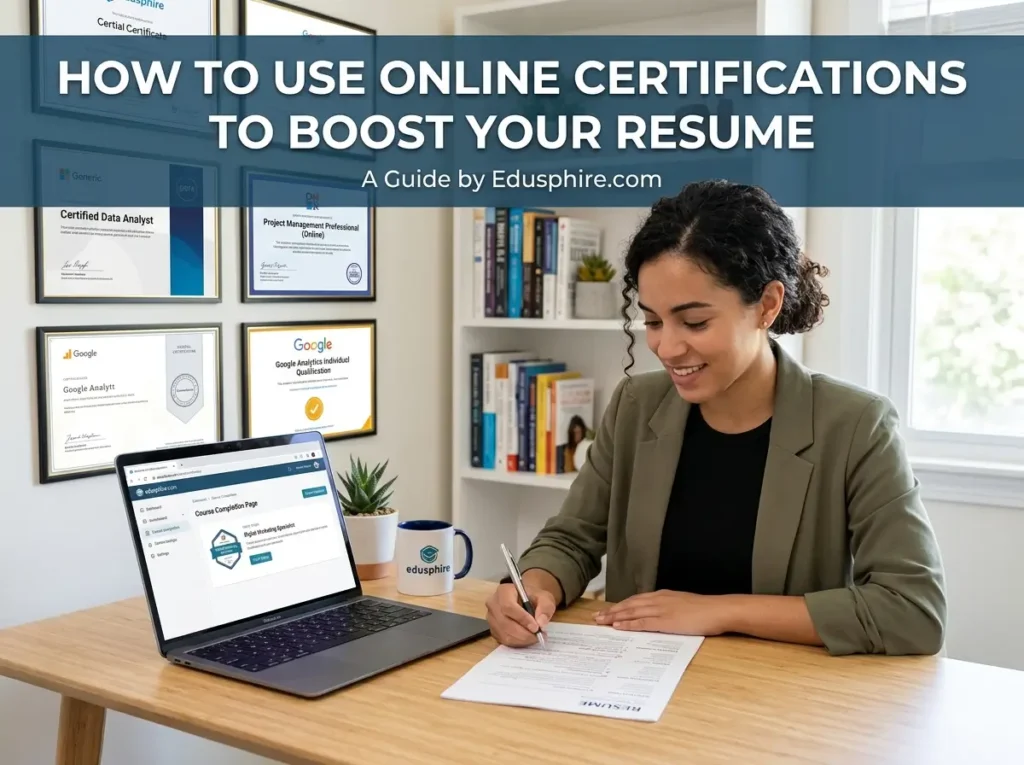
Step 13: Document Certification Achievements Clearly
When listing certifications, clarity is key. Include the full name of the certification, the issuing organization, the date of completion, and, if relevant, the expiration date. If you earned a score or distinction, you can include that as well.
For example, “AWS Certified Solutions Architect – Associate, Amazon Web Services, Completed May 2025, Score: 92%.” Clear documentation helps recruiters quickly verify your credentials and assess your qualifications.
Step 14: Prepare for Certification Verification
Employers may verify certifications during the hiring process. Ensure that your certifications are valid, up-to-date, and easily verifiable online. Many platforms provide a verification link or digital badge that can be included on your resume or LinkedIn profile.
Being prepared for verification shows professionalism and prevents delays during the hiring process. It also reassures employers that your credentials are authentic and credible.
Step 15: Combine Certifications With Experience
While certifications enhance a resume, they are most effective when paired with relevant experience. Employers value certifications that complement practical skills demonstrated in work experience, internships, or volunteer projects.
When describing work experience, highlight how certifications informed your contributions or enhanced your performance. For example, “Applied knowledge from the HubSpot Inbound Marketing Certification to design and execute a social media campaign that increased engagement by 25%.” This integration strengthens your resume by showing both knowledge and application.
Step 16: Highlight Transferable Skills
Certifications can also showcase transferable skills that are valuable across multiple industries. Skills such as project management, data analysis, leadership, and communication are applicable in many roles. Highlighting these skills can make your resume appealing to a broader range of employers.
For example, a certified project management professional may not only qualify for PM roles but also demonstrate strong organizational and leadership skills useful in operational or administrative positions.
Step 17: Use Online Certifications to Boost Your Resume and Stand Out in Competitive Fields
In fields with high competition, certifications can provide a differentiator. Employers often receive dozens or hundreds of applications for a single position. A relevant certification immediately signals that you have invested in your skills and are committed to professional growth.
When combined with a strong resume and tailored application, certifications can help you rise above the competition and increase your chances of securing interviews and job offers.
Step 18: Monitor Industry Trends
Certifications are most effective when they align with current industry demands. Stay informed about emerging technologies, tools, and methodologies in your field. Pursuing certifications in areas of growing importance demonstrates foresight and adaptability.
For example, cloud computing, cybersecurity, AI, and data analytics are rapidly expanding fields where updated certifications can significantly boost employability. Monitoring trends ensures that your certifications remain relevant and valuable.
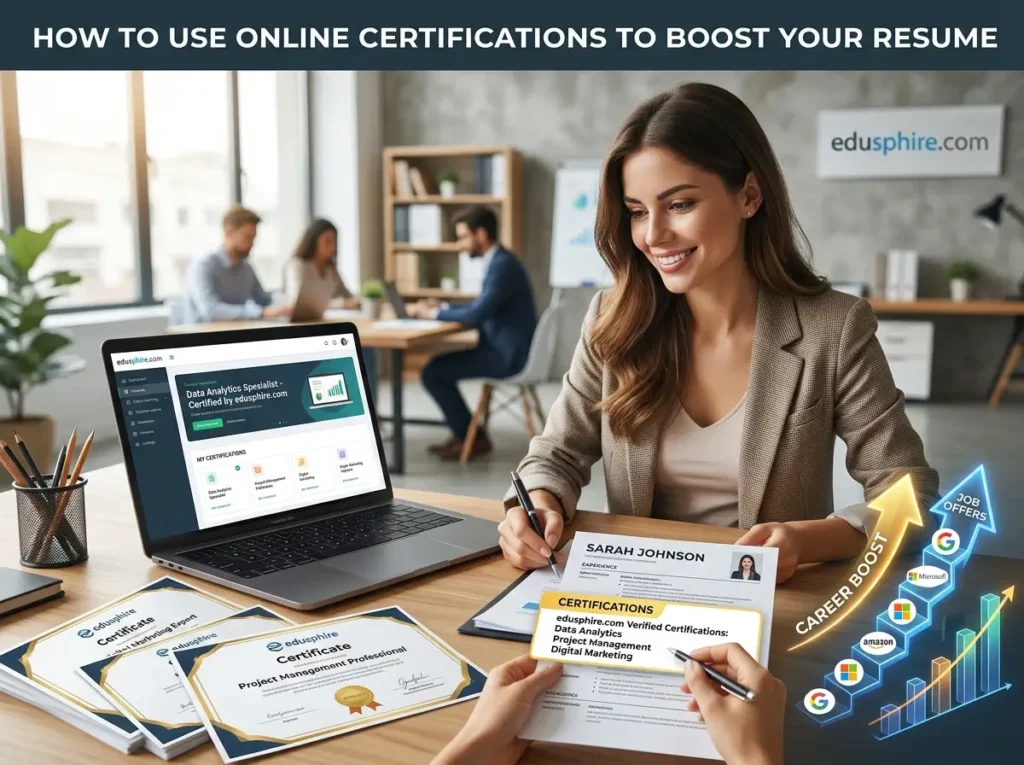
Step 19: Balance Certification With Other Qualifications
While certifications are powerful, they should complement, not replace, your education and experience. A well-rounded resume combines formal education, practical experience, and targeted certifications.
Employers value candidates who bring a mix of theoretical knowledge, practical application, and verified skills. Balance your certifications with other qualifications to create a holistic and compelling profile.
Step 20: Maintain and Update Certifications
Certifications may expire or require continuing education to stay current. Maintaining your certifications demonstrates ongoing commitment and ensures that your resume reflects the latest skills and standards.
Regularly review your credentials, renew certifications as needed, and pursue additional learning opportunities to keep your resume competitive. A dynamic, up-to-date resume signals to employers that you are proactive and invested in your professional growth.
Step 21: Final Thoughts
Use Online Certifications to Boost Your Resume is a powerful tool for boosting your resume, enhancing employability, and showcasing expertise. By selecting relevant, high-quality credentials, integrating them strategically into your resume, and combining them with practical experience, you can create a profile that stands out to employers.
Whether you are entering the workforce, transitioning careers, or aiming for a promotion, certifications demonstrate initiative, adaptability, and commitment to growth. Use Online Certifications to Boost Your Resume They offer tangible proof of your skills and provide a competitive edge in the job market. By approaching certifications thoughtfully, you can leverage them to transform your resume and open doors to new career opportunities.