
Study Desk Setup Ideas Every College Student Needs
Study Desk A college student’s study desk is more than just a place to keep a laptop and a few notebooks. It is the command center for assignments, online classes, exam prep, late-night study sessions, creative projects, and personal goals. Whether you live in a dorm room, shared apartment, campus housing, or at home with family, the way your study desk is set up can have a major impact on your focus, comfort, productivity, and motivation.
College life in the United States can move fast. Between lectures, part-time jobs, group projects, internships, social plans, and deadlines, students need a study space that helps them stay organized without feeling overwhelmed. A messy, uncomfortable, or distracting desk can make schoolwork feel harder than it already is. On the other hand, a well-planned study desk setup can make studying feel calmer, more efficient, and even enjoyable.
The best study desk setup does not have to be expensive or Pinterest-perfect. It needs to be functional, comfortable, and realistic for your daily routine. Some students have a full bedroom desk with shelves and drawers. Others only have a small dorm desk, a corner table, or a shared space. No matter what your setup looks like, a few smart ideas can transform it into a productive study zone.
This guide covers practical study desk setup ideas every college student needs, from lighting and storage to ergonomics, decor, tech organization, and focus-friendly habits.
Why Your Study Desk Setup Matters in College
Your environment shapes your habits more than you may realize. If your desk is cluttered, poorly lit, or uncomfortable, your brain may start associating study time with stress. If your desk is organized, comfortable, and ready to use, it becomes easier to sit down and begin.
A strong study desk setup helps reduce friction. Instead of wasting ten minutes looking for a charger, clearing old food wrappers, or searching for lecture notes, everything you need is within reach. This matters because college students often study in short pockets of time. A clean and prepared desk allows you to make the most of those windows.
Your Study Desk also affects your energy. Bad lighting can cause eye strain. A chair with poor support can make long study sessions uncomfortable. A cluttered workspace can create mental noise. Small improvements like a better lamp, a supportive cushion, or a simple cable organizer can make a noticeable difference.
Most importantly, a good study desk setup idea helps create a boundary between study time and relaxation time. This is especially important in dorm rooms and small apartments, where your bed, desk, closet, and entertainment space may all be within a few feet of each other. When your desk feels like a dedicated academic zone, it becomes easier to focus when you sit there and easier to rest when you step away. Read Ultimate Guide to Effective Student Notes.
1. Start With the Right Desk for Your Space
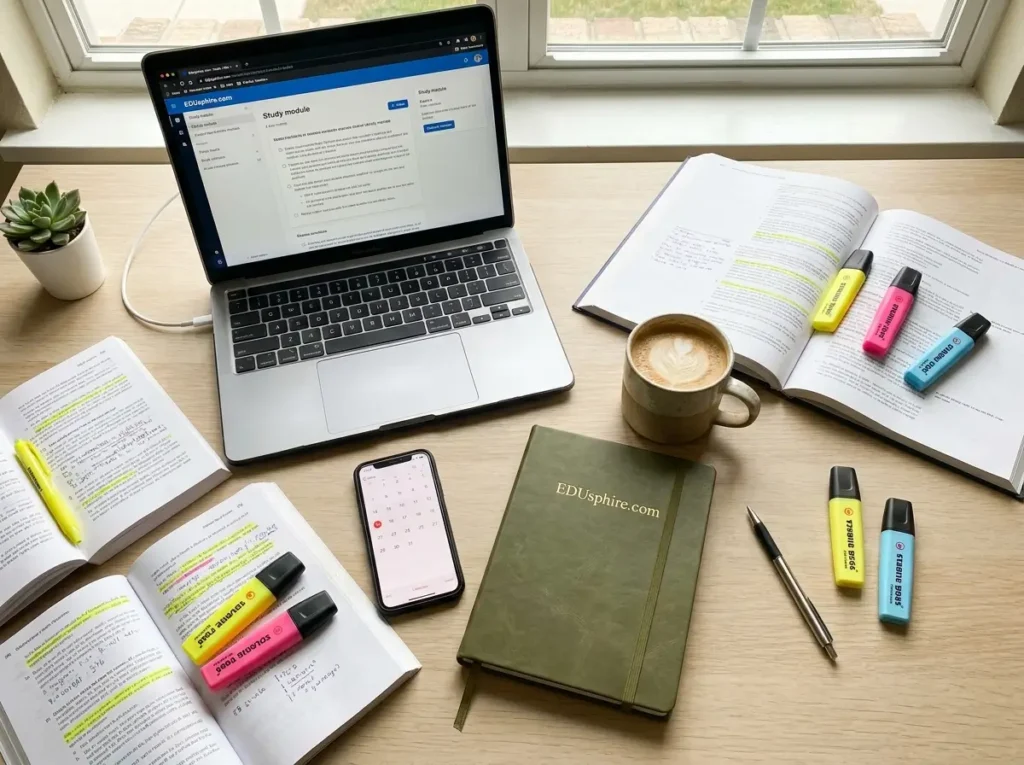
The best desk for a college student depends on the size of the room, the type of work being done, and the amount of storage needed. A large desk may look impressive, but it is not always practical in a small dorm room. A compact desk can be just as effective if it is arranged well.
If you are choosing a desk for an apartment or off-campus housing, look for one that gives enough surface space for a laptop, notebook, lamp, and a few essentials. A desk with drawers can help keep clutter hidden. A desk with shelves can make use of vertical space. A simple writing desk works well for students who prefer a clean, minimal setup.
For dorm rooms, many students use the desk provided by the college. These desks are usually basic, but they can still become highly functional with the right organizers, lighting, and layout. If you cannot replace your desk, focus on improving how you use it.
Students in very small spaces may benefit from a folding desk, wall-mounted desk, or narrow table. A rolling cart beside the desk can add storage without taking up much room. The key is to choose or arrange a desk that supports your study habits instead of crowding your space.
2. Place Your Desk Where You Can Focus
Desk placement can make or break your study routine. If your desk faces too many distractions, it may be harder to concentrate. If it is placed in a dark corner, you may feel tired faster. The goal is to find a spot that supports focus and comfort.
A desk near a window can be helpful because natural light boosts the overall feel of the room. However, if the window faces a busy street, campus walkway, or distracting view, you may need curtains or a different angle. Some students focus better when their desk faces a wall because it limits visual distractions. Others prefer facing into the room because it feels less cramped.
In a shared dorm or apartment, try to position your desk so you are not constantly interrupted by roommates walking by. If privacy is limited, use small visual boundaries like a bookshelf, curtain, or desktop divider. Even a slight separation can help your brain recognize the space as your study zone.
Avoid studying from bed whenever possible. It may feel comfortable at first, but it can make it harder to stay alert while studying and harder to sleep later. Your desk should be the place where work happens, so your bed can remain the place where rest happens.
3. Invest in Good Lighting
Lighting is one of the most important parts of a college study desk setup. Many dorm rooms and apartments have harsh overhead lighting or dim corners that are not ideal for reading, writing, or working on a laptop. A good desk lamp can instantly improve your space.
Choose a lamp that provides bright, even light without creating glare on your screen. Adjustable lamps are especially useful because you can direct light where you need it. A lamp with multiple brightness settings can help you shift from daytime studying to late-night review sessions.
Warm lighting can make a room feel cozy, but very warm or dim light may make you sleepy. Cooler light can feel energizing, but it may feel too harsh at night. Many students prefer a lamp with adjustable color temperature so they can change the lighting based on the time of day.
If your desk is near a window, use natural light during the day and supplement it with a lamp when needed. Good lighting reduces eye strain, helps you stay alert, and makes your desk feel more inviting.
4. Choose a Comfortable Chair
A study desk is only useful if you can sit there comfortably. College students spend hours reading, writing papers, attending online classes, editing projects, and preparing for exams. A poor chair can lead to back pain, poor posture, and constant restlessness.
If you can choose your chair, look for one with good back support, adjustable height, and a comfortable seat. Your feet should be able to rest flat on the floor or on a footrest. Your knees should be around a comfortable angle, and your shoulders should not be hunched while typing.
If you are using a basic dorm chair, you can still improve comfort. Add a seat cushion, lumbar pillow, or small folded blanket for support. A footrest can also help if the chair or desk height is not ideal.
Comfort does not mean turning your study chair into a lounge chair. If the chair is too soft or reclined, you may feel sleepy. The best chair keeps you supported, upright, and relaxed enough to focus.
5. Create an Ergonomic Laptop Setup
Many college students work primarily from a laptop, but laptops are not naturally designed for long hours of comfortable use. When the screen is too low, students often hunch over, which can strain the neck and shoulders.
A simple laptop stand can lift the screen closer to eye level. Pairing it with an external keyboard and mouse creates a more comfortable setup for longer study sessions. This is especially useful for students who write many papers, code, design, edit videos, or attend long online lectures.
If you do not want to buy a stand, a stack of books can work as a temporary solution. The goal is to reduce the need to bend your neck downward for hours.
An ergonomic setup does not need to look complicated. It simply helps your body stay comfortable while your mind stays focused. When studying feels physically easier, you are less likely to quit early because of discomfort.
6. Keep Only Daily Essentials on the Desk
A cluttered desk can make it harder to begin studying. When your workspace is covered with random papers, coffee cups, old receipts, makeup, snacks, and tangled cords, your brain has to process all that visual noise before focusing on the actual assignment.
A strong study desk setup keeps daily essentials within reach and moves everything else somewhere else. Your desk might include your laptop, one notebook, a pen holder, a lamp, a planner, headphones, and a water bottle. Items you do not use every day can go in drawers, bins, shelves, or a rolling cart.
This does not mean your desk has to be completely bare. It can still have personality. The key is to avoid overcrowding the surface. Your desk should have enough open space for writing, reading, and using your laptop comfortably.
A good rule is to reset your desk at the end of each study session. Put away loose papers, throw away trash, return supplies to their place, and prepare the desk for the next time you sit down. This small habit can make studying feel much easier.
7. Use Vertical Storage to Save Space
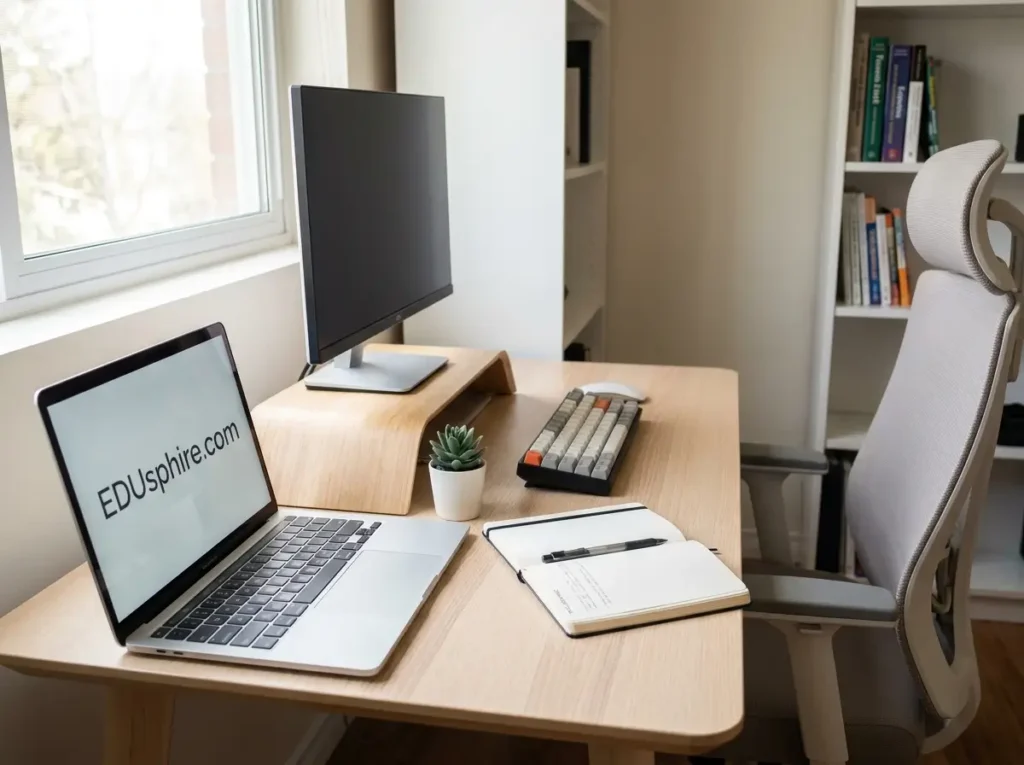
College rooms are often small, so vertical storage is one of the best study desk setup ideas. Instead of spreading supplies across your desk, use the wall, shelves, pegboards, or stacked organizers.
A small bookshelf beside or above your desk can hold textbooks, notebooks, binders, and decor. A desktop shelf can create an extra level for books, speakers, small plants, or storage boxes. Wall grids or pegboards can hold headphones, notes, calendars, and small baskets without using desk space.
Vertical storage is especially useful for students in dorm rooms because floor space is limited. It helps keep important items visible and accessible while keeping the desktop clear.
If you are renting or living in a dorm, use removable hooks and damage-free hanging solutions where allowed. Always check housing rules before attaching shelves or heavy items to walls.
8. Organize Cables Before They Take Over
Chargers and cables can quickly make a study desk look messy. Laptop chargers, phone cords, tablet cables, headphones, desk lamp cords, and extension strips can create a tangled mess that is annoying and distracting.
Cable clips, cord sleeves, Velcro ties, and adhesive cable holders can make a big difference. Use them to guide cords along the back of the desk or down one side. Keep your most-used charger in a fixed spot so you are not searching for it every day.
A charging station is also helpful. This can be a small tray or organizer where your phone, earbuds, tablet, and smartwatch charge in one place. If possible, keep cables off the main writing surface.
Good cable organization makes your desk look cleaner and helps protect your devices. It also reduces the daily frustration of untangling cords when you are already trying to study.
9. Add a Planner or Calendar System
College students juggle many deadlines. Essays, exams, labs, internships, club meetings, work shifts, and social events can pile up quickly. A planner or calendar system near your desk helps keep everything visible.
Some students prefer a physical planner because writing tasks by hand helps them remember. Others use a digital calendar synced across devices. Many students benefit from using both: a digital calendar for events and reminders, and a paper planner for daily assignments and study goals.
A small monthly calendar above the desk can provide a big-picture view of deadlines. A weekly notepad can help plan immediate priorities. A whiteboard can be useful for reminders, formulas, vocabulary, or project steps.
The best system is the one you will actually use. Keep it simple. A beautiful planner means nothing if it stays closed. Your desk setup should make planning easy and visible.
10. Design a Focus-Friendly Tech Zone
Technology is essential for college, but it is also one of the biggest sources of distraction. A smart study desk setup makes technology useful without letting it control your attention.
Start by deciding where your phone goes during study time. Some students keep it across the room. Others place it face down in a drawer or on a charging stand away from the laptop. If you need your phone for two-factor authentication, timers, or study apps, keep it accessible but not directly in front of you.
Use headphones if you study in a shared space. Noise-canceling headphones can be helpful in dorms, libraries, and apartments with roommates. If you prefer background sound, choose instrumental music, white noise, or ambient sounds that do not pull your attention away.
Keep your laptop desktop organized too. A messy digital workspace can feel just as chaotic as a messy physical desk. Organize class folders, delete unnecessary downloads, and keep important files easy to find.
11. Use Desk Decor That Motivates Without Distracting
Your study desk should feel like your space. Decor can make studying more enjoyable, especially in a plain dorm room or apartment. The trick is choosing decor that motivates you without taking over the desk.
A small plant, framed photo, favorite quote, mini lamp, or simple piece of art can add personality. A vision board or inspiration board can remind you why you are working hard. Soft colors, clean textures, and a few meaningful items can make the space feel calm and welcoming.
Avoid decor that creates clutter or distracts you during study time. Too many figurines, large decorations, or constantly moving items can make the desk feel crowded.
A good college desk setup balances function and personality. It should make you want to sit down, but it should not compete with your assignments for attention.
12. Add Plants for a Calmer Study Space
Plants are a simple way to make a study desk feel fresher and more relaxing. They bring life to small rooms and can soften the look of laptops, textbooks, and school supplies.
Low-maintenance plants are best for college students. Snake plants, pothos, ZZ plants, succulents, and philodendrons are popular choices because they are forgiving and do not require constant care. If your desk does not get much natural light, choose a plant that tolerates lower light or use a small grow light.
If real plants are not practical, a realistic artificial plant can still add visual warmth without maintenance. The goal is to create a space that feels less sterile and more comfortable.
Keep plants small enough that they do not take over your workspace. A tiny pot on a shelf or corner of the desk is often enough.
13. Create a Paper Management System
College can generate a surprising amount of paper. Handouts, syllabi, printed articles, lab sheets, notes, receipts, forms, and study guides can pile up fast. Without a system, your desk can become buried.
Use folders, binders, trays, or magazine holders to separate papers by class. Keep current assignments in one easy-access spot and archive older materials elsewhere. A simple “to file” tray can prevent loose papers from spreading across the desk.
At least once a week, go through your papers. Recycle what you no longer need, file important documents, and move completed assignments out of the way. This keeps your desk from becoming a storage unit.
A good paper system saves time when finals arrive because your notes and study materials are already organized.
14. Keep Snacks and Drinks Under Control
Many college students snack while studying, and that is completely normal. However, food clutter can quickly turn a study desk into a messy dining table. Crumbs, sticky drinks, and empty wrappers can damage supplies and attract pests, especially in dorms.
Keep a water bottle nearby to stay hydrated, but use one with a secure lid. If you drink coffee or tea, keep it away from your laptop and notebooks. For snacks, choose a small bowl or plate instead of eating directly from large bags.
After each study session, remove dishes, cups, and wrappers. This habit keeps your workspace clean and prevents unpleasant smells or spills.
Your desk can support your study routine and your snack habits, but it should not become a kitchen counter.
15. Build a Study Supply Station
A study supply station keeps your most-used materials organized and easy to reach. This might include pens, pencils, highlighters, sticky notes, index cards, tape, scissors, a calculator, and paper clips.
A simple pen cup may be enough for minimalists. Students with more supplies may prefer a drawer organizer, desktop caddy, or rolling cart. The goal is to avoid wasting time searching for basic items when you are trying to work.
Keep supplies grouped by purpose. Writing tools in one spot, sticky notes in another, tech accessories in another. When everything has a home, cleanup becomes much easier.
Avoid overbuying supplies. College students often collect more pens, notebooks, and sticky notes than they actually use. Keep what helps you study and store or donate the rest.
16. Make Room for Both Digital and Handwritten Work
Many college assignments are digital, but handwritten work still matters. Students may need space for solving math problems, sketching diagrams, annotating readings, planning essays, or making flashcards.
Your desk should have enough clear surface area to use a notebook comfortably beside your laptop. If the desk is small, use a laptop stand or vertical file holder to create more room. A pull-out keyboard tray or side table can also help.
Some students benefit from a second monitor, especially for research papers, coding, design work, or online classes. If space allows, a monitor can make multitasking easier. If not, a tablet stand may provide a smaller second-screen option.
The best setup supports how you actually study. If you switch often between typing and writing, design your desk so both feel easy.
17. Use Color Coding Without Overcomplicating It
Color coding can help students stay organized, but it should be simple. Assigning a color to each class can make it easier to identify notebooks, folders, sticky notes, and calendar entries.
For example, biology might be green, history blue, math red, and English yellow. This makes your planner and files easier to scan quickly.
However, color coding can become overwhelming if every detail has a separate color. Keep the system broad and practical. The purpose is to save time, not create another complicated task.
Color can also improve the look of your desk. Matching folders, notebooks, or storage bins can make the space feel more organized and intentional.
18. Prepare for Online Classes and Video Calls
Many college students attend online lectures, virtual office hours, remote internships, tutoring sessions, or group meetings. Your study desk setup should be ready for video calls. Position your laptop or webcam at a flattering and comfortable height. Make sure your face is lit from the front rather than only from behind. A desk lamp can help if your room is dim. Keep your background tidy, even if it is simple.
Headphones with a microphone can improve sound quality and reduce background noise. Keep them near your desk so you are not searching for them right before class starts. If you share a room, communicate your class schedule with roommates when possible. A simple sign, calendar, or message can help reduce interruptions during important calls.
19. Create a Reset Routine After Studying
One of the most powerful study desk setup ideas is not an item but a habit. Reset your desk after each study session. This means closing notebooks, throwing away trash, returning supplies, plugging in devices, and preparing the space for next time.
A reset routine can take less than five minutes, but it prevents clutter from building up. It also creates a satisfying sense of closure. When you return later, your desk is ready instead of stressful.
This habit is especially helpful during midterms and finals, when study materials can quickly take over your room. A daily reset keeps chaos under control.
Think of your desk as a tool. Just like athletes take care of their equipment, students can take care of their study space.
20. Make Your Desk Fit Your Study Style
Every college student studies differently. Some need total silence. Others focus better with background music. Some prefer minimal desks. Others feel motivated by colorful notes and decor. The best study desk setup is not one-size-fits-all.
If you are a visual learner, use a whiteboard, sticky notes, diagrams, and wall calendars. If you are a hands-on learner, keep flashcards, notebooks, and practice materials nearby. If you study best in short sessions, keep a timer on your desk. If you are easily distracted, keep your setup minimal and your phone away.
Your major may also affect your desk needs. An art student may need open surface space and supply storage. A computer science student may benefit from a monitor and keyboard. A nursing or pre-med student may need textbook stands and flashcard boxes. A business student may want a clean space for case studies, presentations, and spreadsheets.
Do not copy someone else’s setup exactly if it does not match your life. Use inspiration, then adapt it.

21. Keep Your Desk Budget-Friendly
A productive college desk setup does not require expensive furniture or luxury accessories. Many of the best improvements are affordable or free. Rearranging your desk, clearing clutter, organizing cables, and improving lighting can make a major difference.
Look for budget-friendly organizers, secondhand furniture, discount lamps, and storage bins. Repurpose items you already own. A mug can become a pen holder. A shoebox can organize cords. A stack of books can raise a laptop. A small basket can hold notebooks.
Spend money only where it improves comfort or function. A good lamp, supportive cushion, or laptop stand may be worth it because you will use it daily. Decorative extras can wait.
College is already expensive. Your study desk should help you succeed without creating financial stress.
22. Create a Desk That Encourages Balance
A study desk should help you work, but it should also support balance. College students often feel pressure to be productive all the time, yet rest is part of success. Your desk setup can remind you to study well without burning out.
Keep a water bottle nearby. Use a timer to take short breaks. Add a small reminder to stretch, breathe, or look away from the screen. Keep your workspace clean enough that it does not create extra stress.
When study time is over, step away from the desk. This separation helps your brain recharge. In small rooms, even turning off the desk lamp can signal that the work session is finished.
A healthy study space supports both focus and recovery.
Conclusion: The Best Study Desk Setup Helps You Work Smarter
A college study desk does not need to be large, expensive, or perfectly styled to be effective. It needs to help you focus, stay organized, and feel comfortable enough to do your best work. Whether you are studying in a dorm room, apartment, shared bedroom, or small corner at home, the right setup can make college life feel more manageable.
Start with the basics: good lighting, a comfortable chair, a clear surface, and organized supplies. Then build around your personal study habits. Add vertical storage if space is tight. Use cable organizers to reduce clutter. Keep a planner nearby to manage deadlines. Create a tech setup that supports online classes without inviting constant distraction. Add simple decor or plants to make the space feel inviting.
The most effective study desk setup is one you can maintain. A beautiful desk that becomes cluttered after two days will not help much. A simple, organized, realistic desk can support you all semester long.
College is full of challenges, but your study space should not be one of them. With thoughtful design and a few smart habits, your desk can become a place where you feel focused, prepared, and motivated. From early morning lectures to late-night exam prep, a well-planned study desk can help you work smarter, stay calmer, and make the most of your college experience.