
Time Management Tips for College Success: A Complete Guide for Students
Time Management Tips for College life is exciting, challenging, and full of opportunities. However, with classes, assignments, exams, part-time jobs, extracurricular activities, and social commitments competing for attention, many students struggle to manage their time effectively. Without strong time management skills, it’s easy to fall behind academically and feel overwhelmed by daily responsibilities.
The good news is that successful students are not necessarily smarter or more talented than their peers. Often, they simply know how to manage their time efficiently. Effective time management allows college students to stay organized, reduce stress, improve academic performance, and maintain a healthier work-life balance.
Whether you’re a freshman adjusting to campus life or an upperclassman balancing multiple responsibilities, these practical time management tips can help you stay productive and achieve college success.
Why Time Management Matters in College
Time Management Tips for College is one of the most valuable skills students can develop during their college years. Unlike high school, college often provides greater freedom and flexibility. While this independence is exciting, it also requires students to take full responsibility for managing their schedules.
Poor time management can lead to missed deadlines, lower grades, increased stress, and burnout. On the other hand, students who manage their time effectively often experience better academic outcomes and greater personal satisfaction.
Learning how to prioritize tasks and use time wisely creates habits that benefit students throughout their careers and personal lives. Read Pomodoro Technique.
Set Clear Academic Goals
One of the biggest mistakes college students make is studying without a clear purpose. Effective time management begins with establishing specific academic goals.
Instead of vague objectives such as “study more,” create measurable goals like:
- Complete a research paper by Friday.
- Earn a B+ or higher in a challenging course.
- Review lecture notes for 30 minutes daily.
- Finish reading assignments before each class.
Clear goals provide direction and help students allocate their time more effectively. When you know exactly what you want to accomplish, it becomes easier to stay focused and motivated.
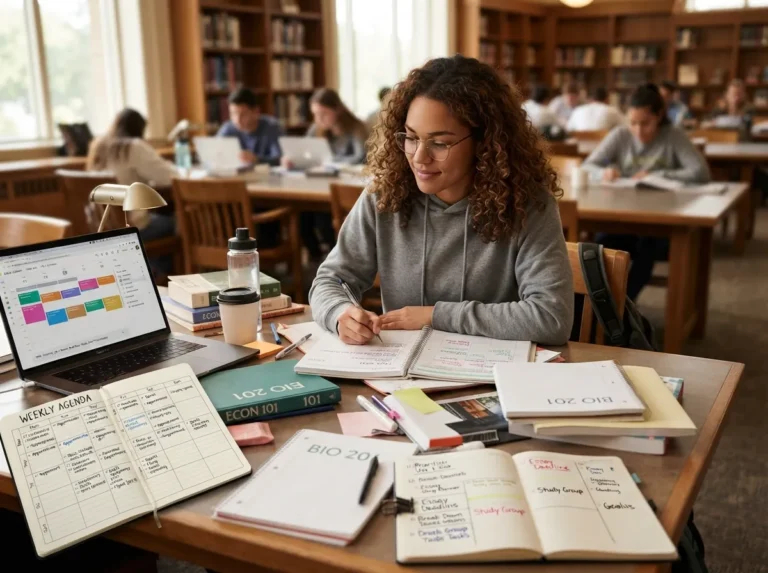
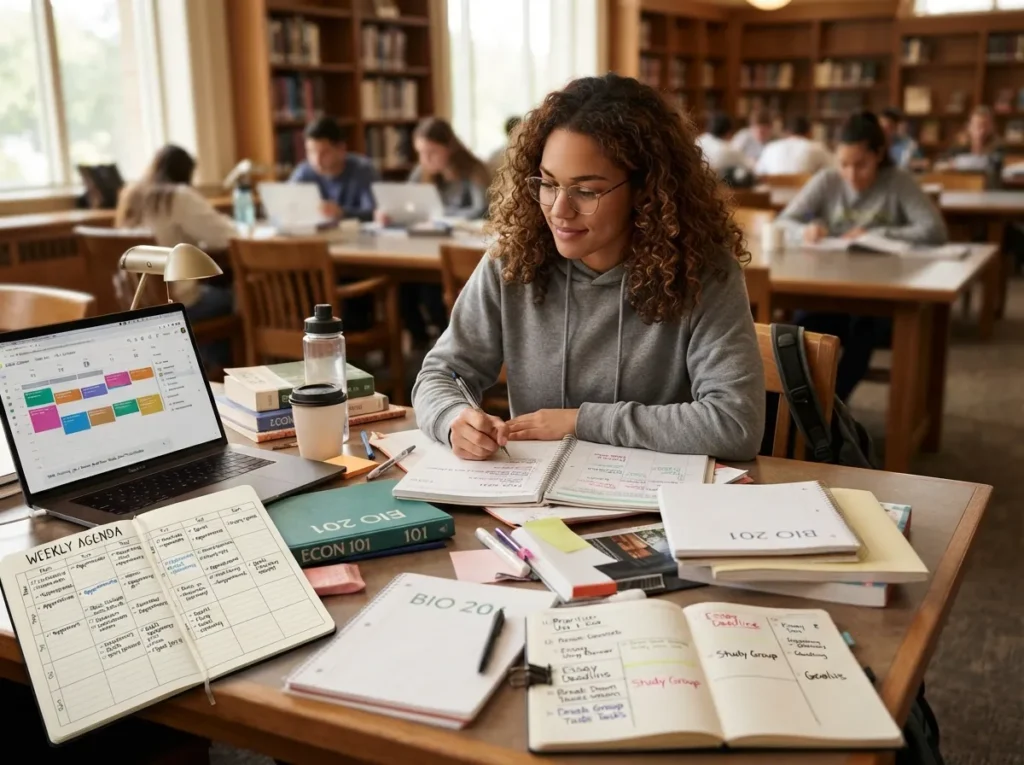
Use a Planner or Digital Calendar
College schedules can quickly become overwhelming. Classes, exams, club meetings, work shifts, and social events can easily create conflicts if not properly organized.
Using a planner or digital calendar helps students keep track of important dates and deadlines. Schedule everything, including:
- Class times
- Assignment due dates
- Exams
- Study sessions
- Work commitments
- Personal appointments
Many successful students review their calendars every morning and every evening. This simple habit helps prevent surprises and ensures important responsibilities are not forgotten.
Prioritize Your Most Important Tasks
Not every task deserves the same level of attention. Learning how to prioritize can significantly improve productivity.
A helpful approach is identifying tasks based on urgency and importance. Focus first on assignments with approaching deadlines, major projects, and exam preparation.
For example, studying for a midterm scheduled next week should typically take priority over organizing notes for a class that meets later in the month.
Each morning, identify the top three tasks that must be completed that day. Completing these priorities first creates momentum and reduces stress.
Create a Weekly Study Schedule
One of the most effective time management strategies for college students is creating a consistent study schedule.
Many students wait until exams are near before opening their textbooks. Unfortunately, cramming often results in lower retention and increased anxiety.
Instead, schedule regular study blocks throughout the week. Treat these study sessions like important appointments that cannot be skipped.
A weekly study schedule helps students:
- Stay ahead of coursework
- Improve memory retention
- Reduce last-minute stress
- Build productive habits
Even short daily study sessions are often more effective than long, infrequent study marathons.
Avoid Procrastination
Procrastination is one of the biggest obstacles to college success. Delaying assignments may provide temporary relief, but it often creates larger problems later.
Students frequently procrastinate because tasks seem overwhelming or difficult. Breaking larger assignments into smaller, manageable steps can make them feel less intimidating.
For example, instead of viewing a research paper as one enormous project, divide it into smaller tasks:
Choose a topic.
Conduct research.
Create an outline.
Write the introduction.
Complete each body section.
Edit and proofread.
Taking one step at a time makes progress easier and helps prevent last-minute panic.
Use Time Blocking Techniques
Time blocking is a highly effective productivity method that involves assigning specific periods of time to specific tasks.
Rather than working from a vague to-do list, students schedule dedicated blocks for studying, attending classes, exercising, and relaxing.
A typical day might look like this:
8:00 AM – 10:00 AM: Classes
10:30 AM – 11:30 AM: Study Session
1:00 PM – 3:00 PM: Work Shift
4:00 PM – 5:00 PM: Assignment Completion
7:00 PM – 8:00 PM: Exam Preparation
This approach minimizes wasted time and helps students remain focused throughout the day.
Eliminate Distractions
Modern technology has created countless distractions that compete for students’ attention. Social media, streaming services, online gaming, and constant notifications can significantly reduce productivity.
To improve focus:
Silence unnecessary notifications.
Keep your phone out of reach during study sessions.
Use website blockers if needed.
Study in a quiet environment.
When students eliminate distractions, they often complete tasks faster and retain information more effectively.
Focused work sessions can accomplish more in one hour than several distracted hours spent multitasking.
Learn to Say No
College offers countless opportunities for involvement, from clubs and organizations to social events and volunteer activities.
While participation can enhance the college experience, overcommitting often leads to stress and exhaustion.
Successful students understand that saying yes to every opportunity is not always beneficial. Sometimes, protecting your schedule is necessary for maintaining academic performance and personal well-being.
Evaluate commitments carefully and focus on activities that align with your goals and priorities.

Take Advantage of Small Time Gaps
Many students underestimate how much they can accomplish during short periods of free time.
A 15-minute break between classes can be used to:
Review flashcards.
Read course materials.
Check upcoming deadlines.
Organize notes.
Respond to important emails.
These small productivity sessions add up throughout the week and help reduce larger workloads later.
Instead of scrolling through social media during every free moment, use some of those minutes strategically.
Practice Effective Study Techniques
Managing time effectively also means studying efficiently.
Students often spend long hours studying without achieving meaningful results because they rely on ineffective methods.
Active learning techniques can maximize productivity and improve retention.
Examples include:
Self-quizzing.
Practice exams.
Teaching concepts to others.
Creating summaries.
Using flashcards.
These methods help students learn more in less time, making study sessions significantly more productive.
Maintain a Healthy Work-Life Balance
Many students mistakenly believe that success requires sacrificing sleep, exercise, and personal time.
In reality, maintaining balance often improves academic performance.
Students who prioritize self-care tend to experience:
Better concentration.
Improved memory.
Higher energy levels.
Lower stress.
Greater motivation.
Schedule time for exercise, hobbies, social interactions, and relaxation. A balanced lifestyle supports long-term academic success and helps prevent burnout.
Get Enough Sleep
Sleep is one of the most important yet overlooked components of effective time management.
Many college students stay up late studying or socializing, believing they can compensate later. Unfortunately, sleep deprivation negatively affects concentration, memory, and decision-making.
Aim for seven to nine hours of sleep each night whenever possible.
Well-rested students often learn faster, perform better on exams, and complete tasks more efficiently than those who regularly sacrifice sleep.
Review Your Progress Weekly
A weekly review session can significantly improve time management skills.
Set aside time each week to evaluate:
Completed assignments.
Upcoming deadlines.
Academic progress.
Study habits.
Scheduling challenges.
Regular reviews help students identify problems early and make adjustments before issues become overwhelming.
This simple habit encourages accountability and continuous improvement throughout the semester.
Build Consistent Habits
The most successful college students understand that productivity is not about occasional bursts of motivation. It is about creating habits that support long-term success.
Small daily actions often produce greater results than inconsistent efforts.
Examples of productive habits include:
Checking your calendar daily.
Reviewing notes after class.
Starting assignments early.
Maintaining an organized workspace.
Following a consistent sleep schedule.
Over time, these habits become automatic and require less mental effort, making it easier to stay productive.
Common Time Management Mistakes to Avoid
Many students unintentionally waste valuable time through ineffective habits.
Common mistakes include:
Waiting until deadlines approach.
Attempting to multitask.
Skipping classes.
Ignoring a planner or calendar.
Overcommitting to activities.
Studying without clear goals.
Recognizing these behaviors can help students make smarter decisions and improve their overall productivity.

Conclusion
Time management is one of the most powerful skills college students can develop. It influences academic performance, stress levels, personal well-being, and future career success.
By setting clear goals, creating a study schedule, prioritizing important tasks, minimizing distractions, and maintaining healthy habits, students can take control of their time and achieve greater success in college.
Remember that effective time management is not about being busy every minute of the day. It is about making intentional choices that align with your goals and values. Small improvements in daily habits can lead to significant academic achievements and a more enjoyable college experience.
FAQs
1. Why is time management important for college students?
Time management helps students stay organized, meet deadlines, reduce stress, and improve academic performance.
2. How many hours should college students study each day?
Most students benefit from studying two to four hours daily outside of class, depending on their course load.
3. What is the best way to avoid procrastination?
Break large tasks into smaller steps, set deadlines, and start assignments as early as possible.
4. Can digital calendars improve time management?
Yes. Digital calendars help students track deadlines, schedule study sessions, and stay organized.
5. How does sleep affect time management?
Adequate sleep improves focus, memory, productivity, and decision-making, making it easier to manage time effectively.