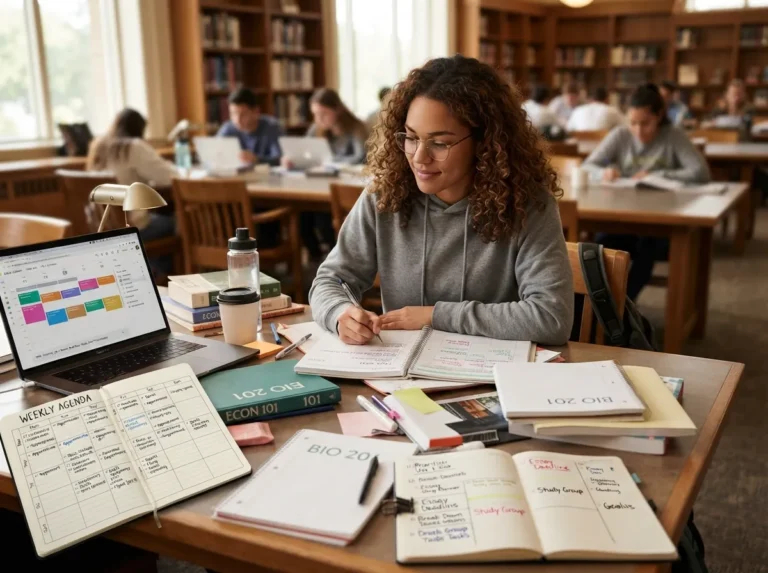

How to Build College Routines That Improve Productivity
How to Build College Routines in College life in the United States can feel exciting, overwhelming, flexible, and chaotic all at once. For many students, college is the first time they are responsible for managing their own schedule without the structure of high school. Classes may start at different times each day. Assignments may be due online at midnight. Social plans, part-time jobs, clubs, sports, internships, and family responsibilities can all compete for attention.
This freedom can be empowering, but it can also make productivity difficult. Many college students begin the semester with strong motivation, new notebooks, organized planners, and big goals. Then reality sets in. Readings pile up. Sleep schedules shift. Exams arrive faster than expected. Motivation fades, and students may find themselves rushing through assignments, staying up too late, or feeling constantly behind.
The solution is not to depend on motivation alone. Motivation comes and goes. A strong college routine creates consistency even when motivation is low.
Building college routines that improve productivity helps students manage time, reduce stress, stay focused, and make steady progress toward academic and personal goals. A good routine does not mean every minute of the day must be planned. It means creating reliable habits that support learning, health, and balance.
Productivity in college is not about doing more every second. It is about doing the right things with more intention. A productive college routine helps students study smarter, protect their energy, meet deadlines, and still have time for rest, relationships, and fun.
Understanding Productivity in College
How to Build College Routines Productivity in college looks different from productivity in a full-time job or high school schedule. College students often have fewer hours in class, but more responsibility outside the classroom. A student may only attend lectures for three or four hours a day, but still need several hours for reading, research, writing, studying, group projects, and exam preparation.
This creates a common misunderstanding. Some students think open time means free time. In reality, open time is where much of college success happens. The students who use that time wisely often feel more prepared and less stressed.
College productivity is the ability to manage academic, personal, and professional responsibilities without constantly feeling overwhelmed. It includes planning ahead, focusing during study sessions, completing assignments before the last minute, getting enough sleep, and making space for mental and physical health.
A productive student is not always busy. In fact, being busy all the time can be a sign of poor planning. A productive routine helps students create enough structure to work efficiently and enough flexibility to enjoy college life.
The goal is not perfection. No student follows a routine perfectly every day. The goal is to build a system that makes it easier to return to good habits after distractions, setbacks, or stressful weeks. read Apply Interactive Learning Methods in College.

Start With a Realistic View of Your Current Schedule
Before building a better college routine, students need to understand how they currently spend time. Many students underestimate how long assignments take and overestimate how much free time they have. This leads to overcommitting, procrastination, and late-night panic.
A good first step is to look at a typical week honestly. Include class times, work shifts, commute time, meals, workouts, club meetings, social plans, sleep, and study time. Once everything is visible, patterns become easier to notice.
Some students discover that their mornings are wasted because they go to bed too late. Others realize they have small gaps between classes that could be used for reviewing notes or answering emails. Some notice that they schedule difficult studying at the time of day when they have the least energy.
This kind of awareness is powerful. A routine should be built around real life, not an unrealistic fantasy schedule. A student who is not a morning person does not need to force a 5 a.m. routine just because it sounds productive. A student who works late shifts may need a different study schedule than someone who has free evenings.
Productive college routines begin with honesty. When students understand their natural energy patterns, weekly responsibilities, and common distractions, they can design routines that actually work.
Create a Morning Routine That Sets the Tone
A strong morning routine can make the rest of the day feel more manageable. In college, mornings often vary depending on class schedules. Some students have an 8 a.m. lecture, while others may not have class until noon. Either way, the first hour after waking up matters.
The purpose of a college morning routine is not to copy someone else’s perfect routine from social media. It is to help students start the day with clarity and momentum.
A productive morning may include waking up at a consistent time, drinking water, making the bed, eating breakfast, checking the day’s schedule, and preparing materials for class. Even a short routine can help students avoid starting the day rushed and scattered.
One common mistake is checking the phone immediately after waking up. This can pull students into messages, social media, news, or notifications before they have had a chance to think about their own priorities. A better approach is to give the first few minutes of the day to planning and personal readiness.
For students with early classes, the morning routine should be simple and repeatable. Clothes, books, laptops, and meals can be prepared the night before. For students with later classes, mornings can become a valuable study window. Many students focus better before campus gets busy and before the day fills with distractions.
A good morning routine gives students a sense of control. It tells the brain, “The day has started, and I know what needs my attention.”
Use a Weekly Planning Routine
College productivity improves when students stop planning one day at a time and begin planning one week at a time. A weekly planning routine helps students see deadlines before they become emergencies.
The best time for weekly planning is often Sunday evening or Monday morning, but any consistent time can work. During this routine, students should review class syllabi, assignment deadlines, exam dates, work shifts, meetings, and personal commitments. Then they can decide when to study, when to complete assignments, and when to rest.
This is especially important because college assignments are often larger and more spread out than high school assignments. A paper due in three weeks may not feel urgent today, but waiting until the last two days can create unnecessary stress. Weekly planning helps students break big tasks into smaller steps.
For example, instead of writing “research paper due Friday,” a student can schedule time to choose a topic, gather sources, create an outline, write a draft, revise, and submit. This makes the assignment less intimidating and reduces last-minute pressure.
A weekly routine also helps students avoid overbooking themselves. When everything is written down, it becomes easier to see whether there is actually enough time for a new commitment. This helps students say yes more intentionally and say no when necessary.
Build Study Blocks Into Your Routine
Studying is one of the most important parts of college productivity, but many students treat it as something they will do “when they have time.” The problem is that time rarely appears on its own. Productive students schedule study blocks just like classes, work shifts, or appointments.
A study block is a planned period of focused academic work. It may be used for reading, reviewing notes, completing assignments, writing essays, practicing problems, or preparing for exams. The key is to decide in advance what the time is for.
Study blocks work best when they are specific. “Study biology from 2:00 to 3:30” is better than “study sometime today.” Even better is “review biology lecture notes and complete practice questions from 2:00 to 3:30.” Specific plans reduce decision fatigue and make it easier to begin.
Students should also match study tasks to energy levels. Difficult subjects, writing assignments, and problem-solving tasks should be placed during high-energy times when possible. Easier tasks, such as organizing notes or reviewing flashcards, can be placed during lower-energy periods.
The location also matters. Some students study best in the library, while others prefer quiet lounges, coffee shops, empty classrooms, or dorm study rooms. The best study location is the place where a student can focus with the fewest distractions.
Regular study blocks prevent academic work from taking over every evening. When students study consistently throughout the week, they are less likely to cram before exams or sacrifice sleep to meet deadlines.
Use Time Blocking Without Overplanning
Time blocking is a popular productivity method for college students because it gives structure to flexible schedules. It involves assigning blocks of time to specific activities, such as class, studying, meals, exercise, work, errands, and rest.
However, time blocking only works when it is realistic. Some students make schedules that look impressive but are impossible to follow. They plan every minute of the day without leaving room for transitions, unexpected assignments, long meals, transportation, or mental breaks.
A better approach is flexible time blocking. Students can create a general structure for the day while leaving buffer time between major tasks. This allows the routine to support productivity without becoming stressful.
For example, a student might block 9:00 to 10:30 for reading, 11:00 to 12:15 for class, 12:30 to 1:15 for lunch, 1:30 to 3:00 for writing, and 4:00 to 5:00 for exercise. The schedule is structured, but not packed so tightly that one delay ruins the entire day.
Time blocking also helps students protect personal time. If rest, meals, exercise, and social connection are not scheduled, they may get pushed aside. A healthy college routine includes recovery, not just work.
The goal of time blocking is not to control every moment. It is to make priorities visible and reduce the mental energy required to decide what to do next.
Create a Productive Evening Routine
Evening routines are just as important as morning routines. A good evening routine helps students close the day, prepare for tomorrow, and improve sleep quality.
Many college students struggle with late-night habits. They may start assignments too late, scroll on their phones in bed, snack mindlessly, or stay up because roommates and friends are active. While college evenings can be social and enjoyable, a lack of structure can hurt productivity the next day.
A productive evening routine does not have to be strict. It may include reviewing tomorrow’s schedule, packing a backpack, setting out clothes, charging devices, writing a short to-do list, and creating a wind-down period before sleep.
The evening is also a good time to reset the study space. A cluttered desk can make it harder to start work the next day. Taking five minutes to organize books, notes, and supplies can reduce morning stress.
Sleep should be treated as part of productivity, not a reward after everything else is done. Students who consistently sacrifice sleep may feel like they are gaining time, but they often lose focus, memory, patience, and motivation. A routine that supports sleep helps students perform better academically and emotionally.
Manage Digital Distractions With Boundaries
Digital distractions are one of the biggest productivity challenges for college students. Phones, laptops, group chats, streaming platforms, social media, and online assignments all exist in the same environment. A student may open a laptop to write a paper and end up checking messages, watching videos, or browsing unrelated tabs.
Building a productive college routine requires intentional digital boundaries. This does not mean students need to give up technology. It means using technology in a way that supports goals instead of constantly interrupting them.
One effective strategy is to create phone-free study blocks. During these blocks, the phone can be placed across the room, inside a backpack, or on do-not-disturb mode. Students can also use website blockers, app limits, or focus settings during study sessions.
Another helpful habit is checking messages at planned times instead of constantly throughout the day. Many students feel pressure to respond instantly, but constant checking breaks concentration. Setting communication windows can help protect focus while still staying connected.
Digital boundaries are also important before bed. Late-night scrolling can delay sleep and make mornings harder. A routine that includes a screen-free wind-down period can improve rest and make the next day more productive.
Students do not need perfect discipline. They need systems that make distraction less automatic.
Build Routines Around Class Success
Class time is the foundation of college learning, but productivity begins before students enter the classroom and continues after they leave. A strong college routine should include habits that support better class performance.
Before class, students can quickly review previous notes or preview the topic for the day. This helps the brain connect new information to what has already been learned. Even five minutes of preparation can improve understanding.
During class, productivity means being mentally present. Students should take organized notes, ask questions when appropriate, and avoid multitasking. Checking email or social media during lectures may seem harmless, but it often leads to missed details and weaker retention.
After class, students should review notes as soon as possible. This does not need to take long. A short review can help identify confusing points, highlight key concepts, and prepare for future studying. Waiting until exam week to look at notes makes studying much harder.
A simple class routine might include preparation before class, active attention during class, and review after class. This turns each class into a complete learning cycle instead of a one-time event.
Use Routines to Reduce Procrastination
Procrastination is common in college, but it is often misunderstood. Many students procrastinate not because they are lazy, but because a task feels unclear, overwhelming, boring, or emotionally uncomfortable.
Routines reduce procrastination by making starting easier. When a student has a scheduled study block, a specific location, and a clear first step, there is less room for avoidance.
One useful approach is the “start small” method. Instead of telling yourself to write an entire essay, commit to opening the document and writing the first paragraph. Instead of trying to study an entire chapter, begin with ten minutes of review. Starting often creates momentum.
Another strategy is to pair routines with cues. For example, after lunch, a student goes directly to the library for one hour. After evening class, they review notes before returning to the dorm. Over time, the cue makes the behavior more automatic.
Students should also remove unnecessary friction. If studying requires finding a charger, clearing a desk, locating a textbook, and deciding what to work on, procrastination becomes easier. Preparing materials in advance makes productive behavior more convenient.
Procrastination usually grows in vague spaces. Clear routines shrink those spaces.
Make Health Part of Productivity
Many students separate academic productivity from health, but the two are closely connected. Sleep, nutrition, movement, hydration, and mental wellness all affect focus and performance.
A college routine that ignores health is not sustainable. Students may be able to push through for a short time, but eventually exhaustion catches up. Productivity should help students function better, not burn out faster.
Exercise does not need to mean intense gym sessions every day. Walking across campus, stretching, attending a fitness class, biking, or playing recreational sports can all support energy and mood. Regular movement can also provide a mental break from studying.
Meals matter too. Skipping meals or relying only on caffeine can lead to energy crashes. Students should build meal times into their routines instead of treating food as an afterthought. Keeping simple snacks available can help during long class days.
Mental health also deserves routine support. Journaling, mindfulness, counseling appointments, social connection, spiritual practices, or quiet time can all help students manage stress. A productive routine should leave room for emotional recovery.
Healthy students are more likely to be focused students. Taking care of the body and mind is not separate from success. It is part of success.
Balance Academic Goals With Social Life
College is not only about studying. It is also a time for friendships, community, leadership, exploration, and personal growth. A productive routine should support a healthy social life rather than eliminate it.
The challenge is balance. Without boundaries, social plans can crowd out academic responsibilities. Without connection, students may feel isolated and unmotivated. A strong routine helps students make time for both.
One helpful approach is to plan social time intentionally. When students know they have time set aside for friends, clubs, events, or relaxation, they may feel less tempted to interrupt study time. Social time becomes more enjoyable when it is not mixed with guilt about unfinished work.
Students can also use routines to create shared productivity. Studying with a focused friend, attending group review sessions, or working in a quiet space with classmates can combine connection and accountability.
The goal is not to choose between grades and relationships. The goal is to create a routine where both can exist. College success includes academic progress and meaningful experiences.
Adjust Routines During Exam Season
Exam season requires a different level of planning. Midterms and finals can disrupt normal routines because students may have multiple tests, papers, presentations, and projects due around the same time.
Productive students adjust early. Instead of waiting until the week before exams, they review the exam schedule and create a study plan in advance. This prevents cramming and reduces stress.
During exam season, study blocks may need to become longer or more frequent. Students may also need to reduce optional commitments temporarily. This does not mean abandoning balance completely, but it does mean recognizing that certain weeks require extra focus.
Sleep becomes especially important during exams. Pulling all-nighters may seem like a college tradition, but it often leads to poor concentration and weaker memory. A routine that includes rest can improve performance more than extra hours of exhausted studying.
After exams, students should reflect on what worked and what did not. Did they start early enough? Were their study methods effective? Did they need more practice problems, writing time, or office hours? This reflection helps improve routines for the next round of exams.
Use Campus Resources in Your Routine
College campuses across the United States offer many resources designed to help students succeed. However, students often wait until they are struggling badly before using them. A productive routine includes support before problems become emergencies.
Academic advising, tutoring centers, writing centers, professor office hours, libraries, counseling services, career centers, and study groups can all support productivity. These resources are not only for students who are failing. They are for students who want to improve.
Office hours are especially valuable. Meeting with a professor or teaching assistant can clarify confusing material, improve assignments, and build academic confidence. Adding office hours to a weekly routine can make it easier to ask questions before falling behind.
Tutoring and writing centers can also help students work more efficiently. Instead of spending hours stuck on a problem or paper, students can get guidance and move forward.
Using campus resources is a sign of responsibility. Productive students do not try to do everything alone. They know when to seek support.
Keep Your Routine Flexible
A college routine should be strong enough to provide structure but flexible enough to survive real life. Students get sick. Work schedules change. Group projects run long. Family issues happen. Some weeks are simply harder than others.
Rigid routines often fail because one missed task makes students feel like the whole day is ruined. Flexible routines allow students to recover. If a morning study block is missed, the student can move the task to the afternoon. If a workout does not happen, a short walk may still support energy.
Flexibility also means adjusting routines as the semester changes. The routine that works in September may not work during finals. A schedule that works freshman year may not work when internships, advanced classes, or leadership roles are added.
Students should review their routines regularly. A quick weekly check-in can help them ask: What is working? What feels stressful? What needs to change? This keeps the routine useful instead of automatic in the wrong way.
The best college routines are living systems. They grow with the student.

Simple Productivity Habits That Make Routines Easier
While routines are personal, a few simple habits can make productivity easier for most college students. Keep a single calendar for classes, deadlines, work, and appointments. Write down assignments as soon as they are given. Prepare for the next day before going to sleep. Start large projects earlier than feels necessary. Protect sleep during busy weeks. Study in focused blocks instead of distracted marathons.
These habits may sound basic, but they work because they reduce confusion and decision fatigue. College life already requires many decisions. A routine lowers the number of times students have to ask, “What should I do now?”
Small habits matter because they compound. Ten minutes of note review after class may not feel significant in the moment, but over a semester, it can make exam preparation much easier. Preparing a backpack at night may save only a few minutes in the morning, but it can prevent stress and lateness.
Productivity is often built through ordinary actions repeated consistently.
How to Know If Your College Routine Is Working
A routine is only useful if it improves daily life. Students should pay attention to how their routine affects academic performance, stress levels, sleep, focus, and overall well-being.
A working routine usually creates more clarity. Students know what needs to be done and when they will do it. They feel less surprised by deadlines. They may still be busy, but they do not feel constantly out of control.
A good routine also supports better energy. Students are not always exhausted, skipping meals, or staying up all night. They have time for studying, rest, and connection.
Academically, a routine should lead to more consistent preparation. Students attend class ready, complete assignments on time, and begin studying before exams become urgent.
If a routine feels impossible to follow, it may be too ambitious. If it leaves no time for rest, it may be unhealthy. If it does not include enough study time, it may need stronger academic structure.
The best measure of a routine is not whether it looks impressive. It is whether it helps the student live and learn better.
Conclusion: Build a Routine That Supports the Life You Want
College productivity is not about becoming a machine or filling every hour with work. It is about creating routines that help students use their time, energy, and attention wisely. A strong college routine makes academic success more manageable and personal well-being more realistic.
By creating morning and evening routines, planning weekly, scheduling study blocks, managing digital distractions, protecting health, and using campus resources, students can build systems that support long-term success.
The most effective routines are realistic, flexible, and personal. They reflect a student’s classes, goals, energy levels, responsibilities, and lifestyle. They do not require perfection. They require consistency and the willingness to adjust.
For college students in the United States, productive routines can make the difference between feeling constantly behind and feeling prepared for the demands of campus life. With the right habits in place, students can study with more focus, handle stress with more confidence, and make the most of their college experience.
A better routine does not just improve productivity. It creates space for learning, growth, balance, and success.