
Daily Habits That Boost Student Productivity
Boost Student Productivity In today’s fast-paced academic environment, students are constantly seeking ways to stay ahead, manage their time effectively, and maximize their productivity. From high school classrooms to university lecture halls, the pressure to excel academically while balancing extracurricular activities and personal life can be overwhelming. However, incorporating intentional daily habits can significantly boost productivity and create a more balanced, fulfilling student experience.
Understanding what productivity truly means for students is essential. Productivity is not just about doing more; it’s about doing what matters efficiently and with focus. It involves aligning your actions with your goals, reducing distractions, and maintaining energy levels that support consistent performance. By cultivating daily habits designed to enhance focus, motivation, and organization, students can unlock their full potential and reduce stress in the process.
Start Your Day With Purpose
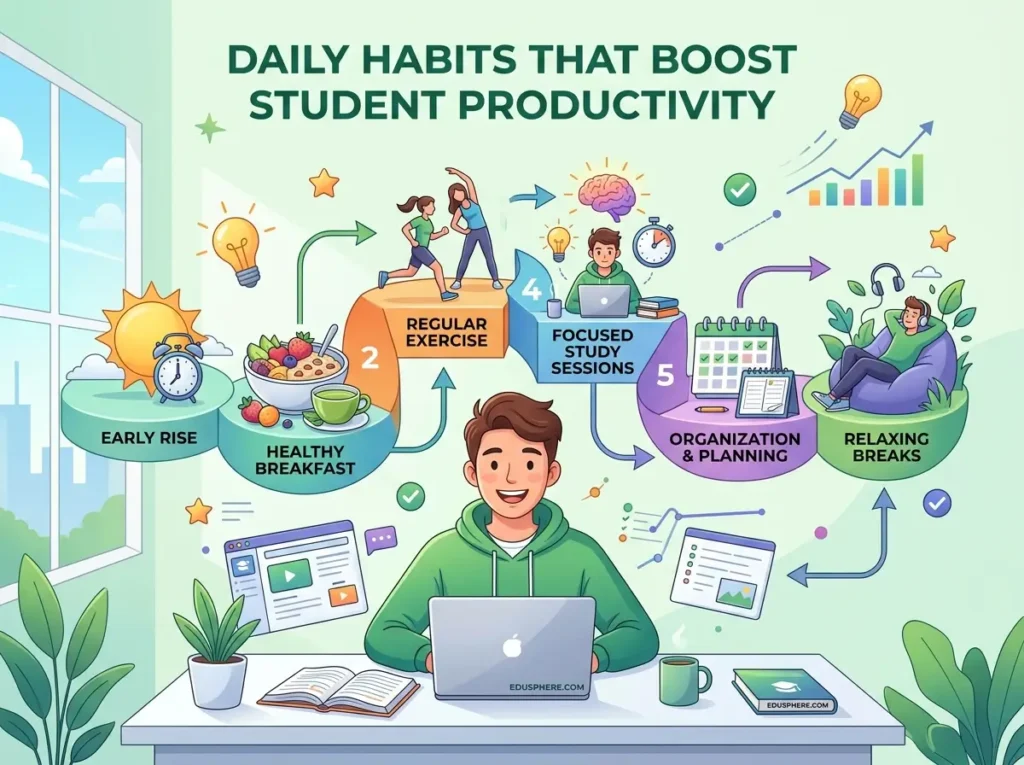
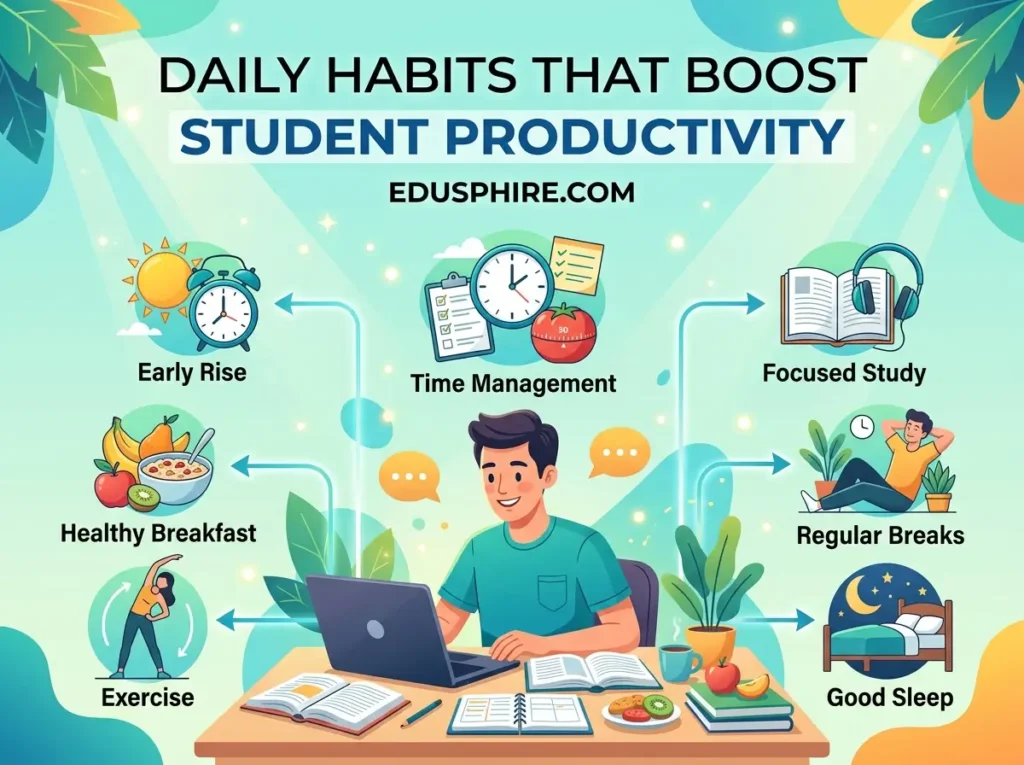
How you begin your day sets the tone for everything that follows. Students who adopt purposeful morning routines tend to experience higher levels of focus and energy throughout the day. Waking up at a consistent time, even on weekends, regulates your body’s internal clock, improving sleep quality and alertness. A morning ritual doesn’t have to be elaborate. Simple activities like stretching, a brief meditation, or writing down top priorities for the day can help prime your mind for productive work.
Nutrition is another critical element of a productive morning. Eating a balanced breakfast rich in protein, complex carbohydrates, and healthy fats fuels the brain and body. Skipping breakfast or relying on sugary snacks can lead to energy crashes and reduced concentration during morning classes or study sessions. Hydration plays an equally important role, as even mild dehydration can impair cognitive performance and decision-making. visit about best school study motivation.
Boost Student Productivity and Prioritize Tasks Effectively
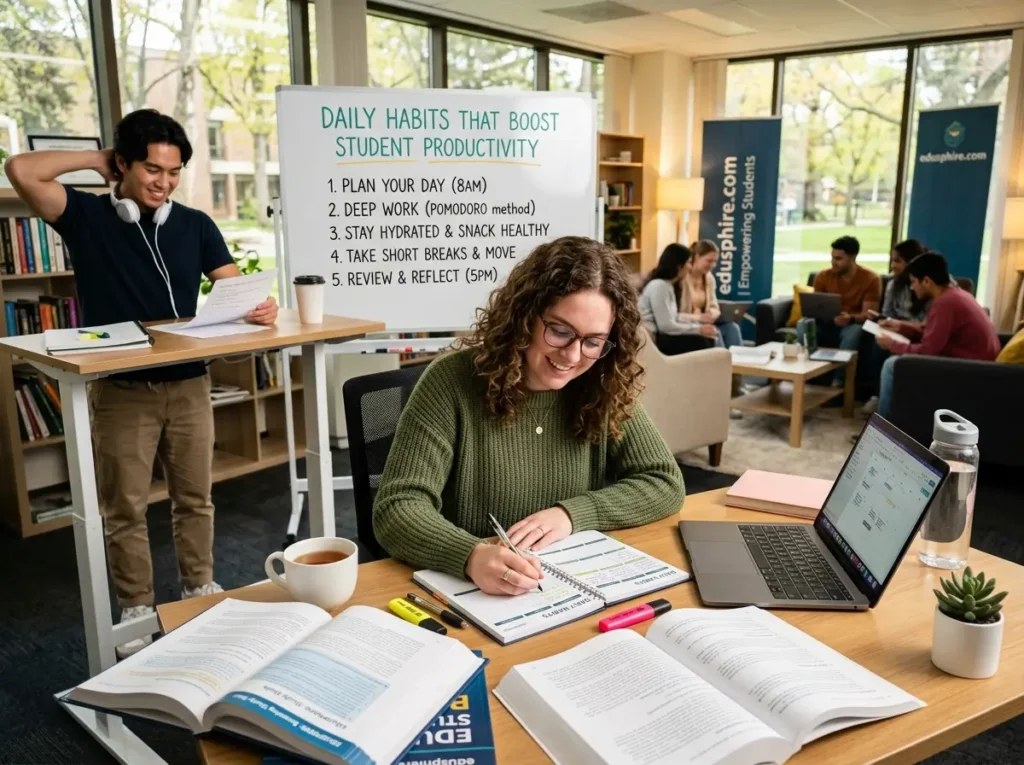
Students often juggle multiple assignments, projects, and exams simultaneously. Without a clear system to prioritize tasks, it’s easy to get overwhelmed and spend energy on low-impact activities. One of the most effective approaches is the “priority matrix,” which categorizes tasks based on urgency and importance. By focusing on high-priority tasks first, students can make meaningful progress and avoid last-minute cramming, which often results in subpar outcomes.
Breaking large projects into smaller, manageable tasks also prevents procrastination. For instance, rather than writing an entire research paper in one sitting, divide it into research, outlining, drafting, and revising. This approach creates a sense of accomplishment as each segment is completed, boosting motivation and reducing stress.
Establish a Dedicated Study Space
The environment in which students study has a direct impact on their productivity. A dedicated, distraction-free study space signals to the brain that it’s time to focus. Whether it’s a quiet corner of a room, a library desk, or a café, the key is consistency. Keeping your study area organized and clutter-free can also minimize cognitive distractions and make it easier to locate necessary materials quickly.
Lighting and ergonomics are often overlooked but essential factors. Natural light supports alertness and mood, while a comfortable chair and desk setup prevent fatigue and physical discomfort during long study sessions. Background noise should be tailored to individual preferences; some students thrive in complete silence, while others benefit from low-level instrumental music that enhances concentration. Best study tips improve your grades.
Practice Time Management
Time management is a cornerstone of student productivity. Allocating specific time blocks for studying, attending classes, and personal activities helps maintain balance and prevents burnout. Techniques like the Pomodoro method, where students work in focused intervals followed by short breaks, can enhance concentration and sustain mental energy.
Maintaining a daily schedule or planner, either digitally or on paper, allows students to visualize their commitments and set realistic goals. Effective time management isn’t just about fitting more into a day; it’s about creating intentional space for deep work and self-care. Overloading schedules can lead to exhaustion and reduced productivity, so finding a rhythm that works is key.
Engage in Active Learning
Active learning is a strategy that moves beyond passive reading or note-taking. It involves engaging with material through discussion, practice, or teaching others. Students who actively interact with content retain information more effectively and develop critical thinking skills. Techniques such as summarizing lessons in your own words, creating flashcards, or teaching a peer can reinforce knowledge and improve comprehension.
Incorporating different learning methods, including visual, auditory, and kinesthetic approaches, can also enhance retention. For example, drawing diagrams, listening to recorded lectures, or physically acting out concepts can make complex information easier to understand and recall during exams.
Boost Student Productivity and Maintain Physical Health
Physical health is intricately connected to mental performance. Regular exercise boosts blood flow to the brain, improves mood, and reduces stress, all of which contribute to enhanced cognitive function. Even moderate activities like walking, stretching, or cycling can improve alertness and energy levels, making study sessions more effective.
Sleep is equally crucial. Consistently getting seven to nine hours of quality sleep each night helps consolidate memory, improves focus, and supports overall mental well-being. Students who sacrifice sleep for extra study time often experience diminished productivity and impaired decision-making, negating any temporary gains.
Cultivate Mindfulness and Stress Management
Academic life can be stressful, and unmanaged stress negatively impacts productivity. Mindfulness practices such as meditation, deep breathing, and journaling help students manage stress and maintain focus. Taking a few minutes daily to reflect, set intentions, or simply pause can prevent mental fatigue and promote emotional resilience.
Students can also benefit from learning to say “no” to unnecessary distractions or commitments. Overcommitting to extracurricular activities or social events without considering personal limits can lead to burnout. Mindful prioritization ensures that time and energy are invested in activities that truly support academic and personal goals.
Use Technology Wisely
Technology can be both a productivity booster and a distraction. Tools like task management apps, note-taking software, and digital calendars help students organize their workload and track progress. For instance, apps that integrate study reminders and timers can keep students accountable and focused on tasks.
However, excessive use of social media or unrelated digital content can derail focus. Establishing boundaries for phone and app usage during study periods, such as activating “Do Not Disturb” modes, helps create uninterrupted time for deep work. Using technology strategically rather than passively is key to maximizing productivity.
Build Consistent Review Habits
Consistent review of material is essential for long-term retention and exam readiness. Cramming may yield short-term recall, but spacing study sessions over time leads to stronger comprehension and memory consolidation. Students should set aside daily or weekly review periods to reinforce learning and identify areas that need improvement.
Active recall and self-testing are powerful methods to solidify knowledge. Quizzing oneself on key concepts or using practice exams helps gauge understanding and provides actionable feedback for focused study. Over time, these consistent review habits become a natural part of the learning process, reducing last-minute stress before exams.
Foster Healthy Relationships and Collaboration
Social connections and collaboration also contribute to student productivity. Engaging with classmates through study groups, discussions, or collaborative projects can enhance learning, expose students to new perspectives, and motivate them to stay on track. Constructive feedback from peers helps identify blind spots and encourages continuous improvement.
Maintaining supportive relationships outside academics, such as with family and friends, also contributes to overall well-being. Feeling connected reduces stress, improves mood, and reinforces motivation to excel in academic endeavors. Balance between social engagement and focused study is crucial to avoid distractions while reaping the benefits of a healthy support network.
Practice Reflection and Goal Setting
Reflection is a habit that allows students to evaluate their progress, identify successes, and learn from setbacks. Setting specific, measurable, achievable, relevant, and time-bound (SMART) goals provides clear direction and motivation. Daily or weekly reflections can help students assess how effectively they used their time, adjust strategies, and celebrate achievements.
By understanding what works and what doesn’t, students can optimize their routines and create habits that consistently support productivity. Reflection encourages accountability and self-awareness, which are foundational for lifelong learning and academic success.

Optimize Your Study Techniques
Not all study methods are equally effective. Identifying the techniques that suit individual learning styles enhances retention and comprehension. Active engagement, summarization, spaced repetition, and interleaving are research-backed strategies that improve understanding and memory. Combining these techniques with focused study blocks and intentional breaks leads to more efficient and effective learning.
Students should also experiment with different environments, materials, and schedules to discover what maximizes their personal productivity. Flexibility allows adaptation to changing demands while maintaining consistency in study habits.
Embrace Small Wins and Momentum
Productivity is often a game of momentum. Completing small, manageable tasks generates a sense of accomplishment that fuels motivation for larger projects. Breaking the day into achievable segments, tracking progress, and celebrating even minor successes reinforces positive behavior and keeps students engaged.
Recognizing small wins also reduces stress and builds confidence. Students who focus solely on long-term outcomes can feel overwhelmed, whereas acknowledging progress along the way sustains motivation and encourages persistence.
Integrate Learning With Lifestyle
A holistic approach to productivity integrates academic responsibilities with a balanced lifestyle. Regular physical activity, proper nutrition, adequate sleep, stress management, and social interaction all contribute to cognitive performance and overall well-being. Productivity is not merely about studying harder; it’s about creating a lifestyle that supports sustained energy, focus, and motivation.
Students who integrate these elements seamlessly into daily life find it easier to maintain consistent habits, avoid burnout, and achieve academic success. Over time, these habits become second nature, supporting both educational goals and personal growth.
Conclusion
Daily habits are the backbone of Boost Student Productivity. From starting the day with purpose to prioritizing tasks, managing time, and nurturing physical and mental health, each habit contributes to a more focused, efficient, and balanced academic life. By intentionally cultivating these practices, students can reduce stress, improve learning outcomes, and build a foundation for long-term success.
The journey to becoming a Boost Student Productivity is not about radical changes or extreme discipline; it’s about consistent, intentional choices that align with personal goals. Students who embrace these daily habits position themselves for academic achievement, personal growth, and a more fulfilling college or high school experience.
Ultimately, Boost Student Productivity is about doing what matters most, consistently, and with intention. By embedding these habits into daily life, students in the United States and beyond can navigate their academic journey with confidence, focus, and resilience.