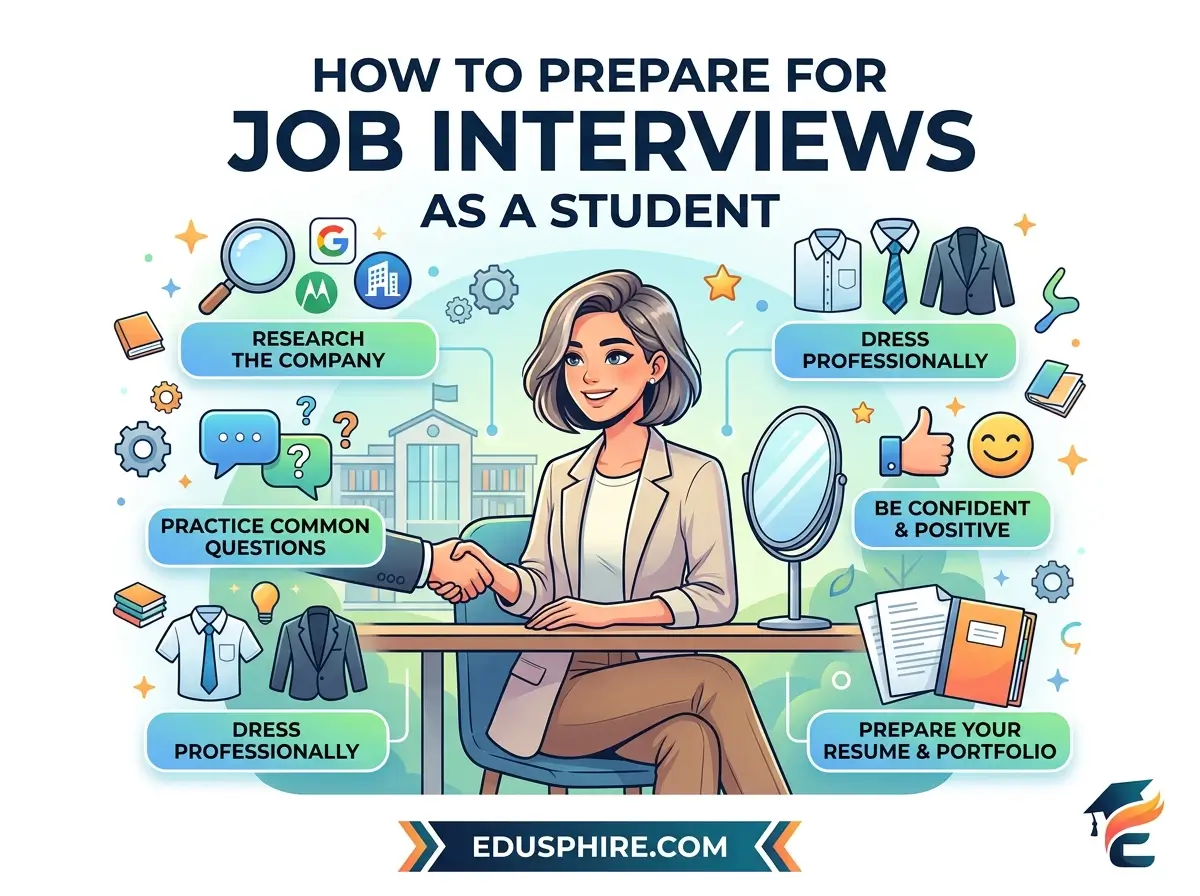
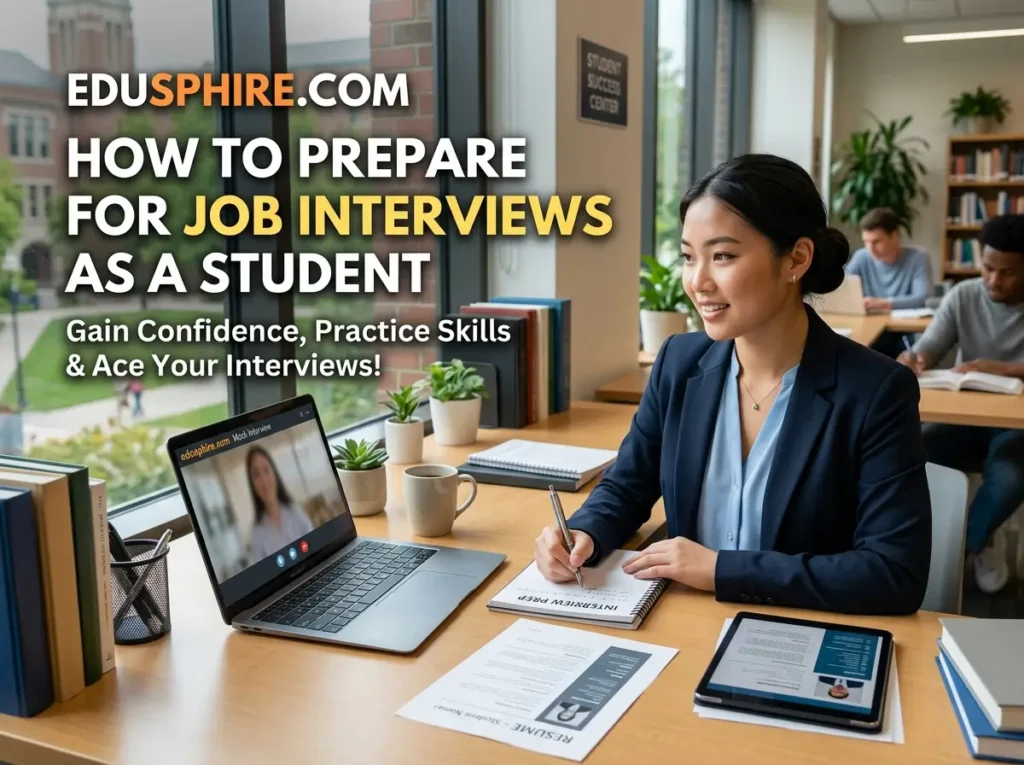
How to Prepare for Job Interviews as a Student
Prepare for Job Interviews Follow these awesome Landing your first job or internship as a college student can feel overwhelming, especially when it comes to job interviews. Interviews are a critical step in the hiring process, allowing employers to evaluate not only your skills but also your personality, professionalism, and potential fit within the organization. For students in the United States, mastering interview preparation is essential to stand out in a competitive job market.
Preparing for job interviews as a student involves more than just reviewing your resume. It requires strategic planning, self-reflection, research, and practice. Students who invest time in preparation gain confidence, enhance their communication skills, and increase their chances of making a positive impression.
This guide will provide a comprehensive roadmap to help students navigate interview preparation effectively, from understanding the types of interviews to practicing responses and following up after the meeting.
Understand the Purpose of Job Interviews
Prepare for Job Interviews serve as a two-way evaluation. Employers use interviews to assess your knowledge, skills, problem-solving abilities, and personality. At the same time, interviews give students an opportunity to evaluate the company culture, role expectations, and career growth potential. Recognizing this dual purpose helps students approach interviews strategically rather than anxiously.
For students, interviews are an opportunity to showcase transferable skills, academic achievements, internships, volunteer experiences, and extracurricular involvement. Employers understand that students may have limited professional experience, so demonstrating enthusiasm, adaptability, and a willingness to learn can be just as impactful as technical expertise.
Understanding the purpose of the interview also helps students tailor their preparation. Instead of memorizing answers, focus on articulating experiences, strengths, and goals in a way that aligns with the company’s expectations. Read guide to Creating a Student Portfolio.
Research the Company Thoroughly
Research is a critical foundation of interview preparation. Students should explore the company’s mission, values, products or services, and industry position. Understanding the company allows you to answer questions confidently and demonstrate genuine interest.
Start by reviewing the company website, social media pages, press releases, and any recent news. Take note of achievements, projects, or initiatives that resonate with your goals or values. This research helps in crafting thoughtful questions to ask interviewers, showing that you are informed and proactive.
Additionally, understanding the company culture is crucial. Many U.S. employers place a strong emphasis on cultural fit, teamwork, and adaptability. Researching the company’s culture allows you to align your responses with the qualities they value and highlight how you would contribute positively.
Understand the Job Role
A clear understanding of the position you are interviewing for is essential. Review the job description in detail and identify key responsibilities, required skills, and desired qualifications. This analysis allows you to match your experiences, coursework, and skills to the position effectively.
Students should also consider the competencies employers prioritize, such as communication, problem-solving, leadership, and teamwork. Even if your professional experience is limited, highlighting academic projects, volunteer work, or extracurricular involvement that demonstrates these competencies can strengthen your candidacy.
By understanding the job role thoroughly, you can anticipate interview questions and prepare examples that showcase your suitability for the position.
Prepare Your Resume and Supporting Materials
Your resume is often the first impression an employer has of you, and it plays a crucial role in interview preparation. Ensure your resume is accurate, professional, and tailored to the position. Highlight relevant coursework, internships, volunteer experiences, and extracurricular activities.
Students should also prepare additional materials that may be requested, such as portfolios, writing samples, or project summaries. Organizing these materials in advance ensures you can present them confidently during the interview.
Finally, practice discussing each item on your resume. Interviewers may ask about specific experiences, achievements, or skills listed, so being able to elaborate clearly and concisely is essential.
Anticipate Common Interview Questions
Students should familiarize themselves with common interview questions and prepare thoughtful responses. Questions often fall into categories such as behavioral, situational, and technical. Behavioral questions focus on past experiences and how you handled challenges, while situational questions evaluate how you might approach hypothetical scenarios. Technical questions assess specific knowledge or skills related to the role.
Examples of questions students may encounter include “Tell me about yourself,” “Describe a time you faced a challenge and how you overcame it,” and “Why do you want to work for this company?” Preparing clear, structured responses helps convey confidence and professionalism.
Using frameworks like STAR (Situation, Task, Action, Result) can help structure responses to behavioral questions effectively. Even students with limited work experience can use academic projects, group assignments, or volunteer activities as examples.
Practice Interview Techniques
Practice is essential to feeling confident in an interview. Students should conduct mock interviews with friends, mentors, or career advisors to simulate real interview conditions. Practicing allows you to refine answers, improve body language, and receive constructive feedback.
Recording yourself during mock interviews can also be valuable. Observing your tone, pace, and gestures helps identify areas for improvement and build self-awareness. Practicing out loud reinforces memory and ensures that responses sound natural rather than rehearsed.
Additionally, practicing different types of interviews—such as phone, video, and in-person—prepares students for varying formats they may encounter. Each format requires specific strategies, including managing background distractions, maintaining eye contact, and ensuring clear audio during virtual interviews.
Develop Strong Communication Skills
Prepare for Job Interviews Effective communication is one of the most critical skills in interviews. Students should focus on speaking clearly, confidently, and concisely. Avoid filler words, rambling, or overcomplicating responses.
Prepare for Job Interviews Nonverbal communication is equally important. Maintaining good posture, making eye contact, and using appropriate gestures convey confidence and professionalism. Students should also be mindful of tone and pace, ensuring that responses are engaging and easy to follow.
Active listening is another crucial aspect. Paying attention to the interviewer’s questions, responding thoughtfully, and asking clarifying questions when necessary demonstrates attentiveness and respect. Strong communication skills help students leave a positive and lasting impression.
Prepare Questions for the Interviewer
Prepare for Job Interviews are a two-way street. Asking thoughtful questions shows interest in the company and demonstrates initiative. Students should prepare questions that explore company culture, growth opportunities, team dynamics, and expectations for the role.
Avoid asking questions that can be easily answered by reviewing the company website. Instead, focus on questions that reflect curiosity and strategic thinking, such as “What skills do successful employees in this role typically possess?” or “How does the company support professional development for entry-level employees?”
Prepare for Job Interviews questions not only provide valuable information but also reinforce your enthusiasm and engagement with the role.
Manage Stress and Build Confidence
Interviews can be stressful, especially for students entering the professional world for the first time. Managing stress is crucial to performing well. Techniques such as deep breathing, visualization, and positive self-talk can help reduce anxiety and boost confidence.
Confidence comes from preparation. The more effort students put into researching the company, practicing responses, and reviewing their experiences, the more self-assured they will feel during the interview. Remember that interviewers expect students to be learning and growing, so authenticity and a willingness to learn are highly valued.
Dress Professionally and Prepare Logistics
Prepare for Job Interviews Professional appearance contributes significantly to a positive impression. Students should dress appropriately for the company and industry, ensuring that clothing is clean, neat, and aligned with professional standards. When in doubt, business casual attire is usually a safe choice.
Additionally, planning logistics is critical. Arriving on time, knowing the interview location, and preparing necessary materials demonstrates reliability and responsibility. For virtual interviews, ensure a quiet environment, stable internet connection, and proper camera setup. These details, though often overlooked, can significantly impact the interviewer’s perception.
Use Examples to Showcase Skills
Students often worry about their lack of professional experience, but they can leverage examples from academic projects, extracurricular activities, volunteer work, and part-time jobs to demonstrate transferable skills. Using concrete examples makes responses more compelling and credible.
For instance, leading a group project can illustrate teamwork, leadership, and problem-solving abilities. Organizing a campus event can showcase planning, communication, and project management skills. By framing experiences effectively, students highlight their potential and readiness for professional responsibilities.
Research Industry Trends
Understanding industry trends shows that students are informed and proactive. Researching trends, challenges, and innovations in the field allows students to discuss relevant topics and demonstrate awareness of the larger professional landscape.
Employers value candidates who stay current with industry developments, as it reflects curiosity, engagement, and strategic thinking. Even students without extensive experience can reference trends in projects, coursework, or relevant news to add depth to their responses.
Practice Professional Etiquette
Professional etiquette is a key factor in successful interviews. Students should practice polite greetings, active listening, and courteous behavior. Sending a thank-you note or email after the interview is also essential, expressing gratitude and reaffirming interest in the position.
Etiquette extends to virtual interviews as well. Maintaining eye contact with the camera, muting distractions, and demonstrating attentiveness are all part of professional conduct. Polished etiquette helps students leave a strong, lasting impression.
Reflect on Past Experiences
After each interview, students should reflect on what went well and what could be improved. Identifying strengths and areas for growth allows students to continuously enhance performance for future interviews. Reflection encourages self-awareness, strategic thinking, and adaptability.
Documenting reflections also creates a resource for ongoing improvement. Keeping notes on questions asked, responses given, and feedback received helps students prepare for subsequent interviews and refine their approach.
Build Confidence Through Mock Interviews
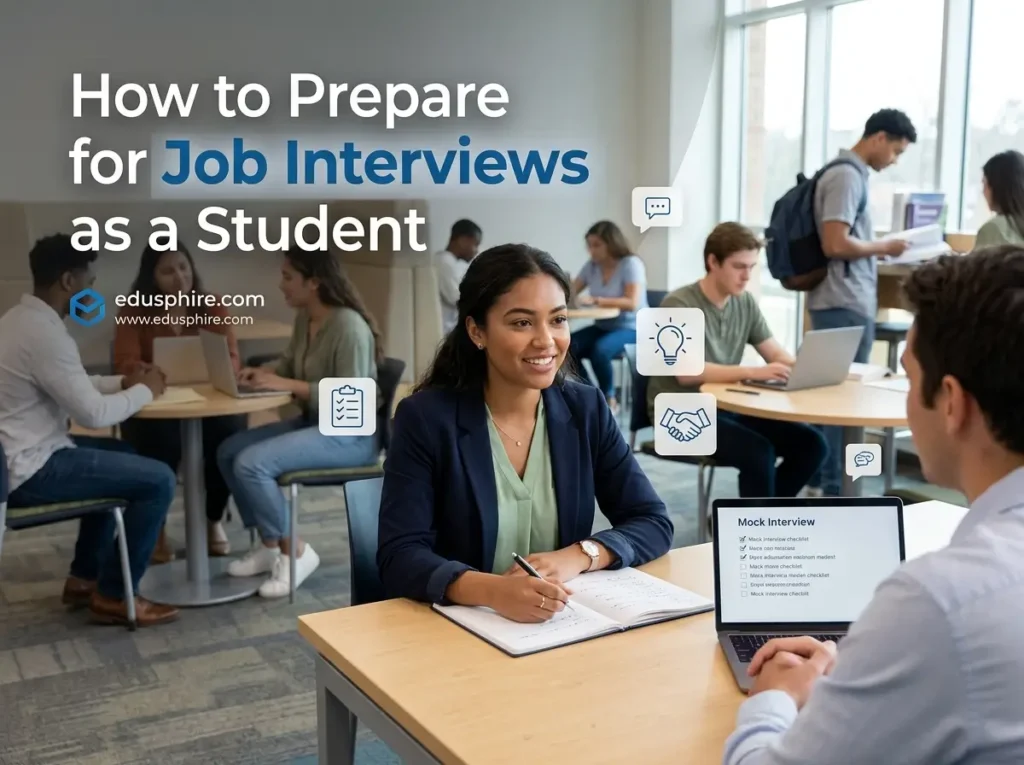
Mock interviews provide a safe environment to practice responses, receive feedback, and gain confidence. Students can participate in mock interviews with career services, mentors, or peers. Simulating real interview conditions helps reduce anxiety, improve communication skills, and increase readiness.
Repetition builds familiarity and comfort, ensuring that students can navigate questions smoothly and present themselves professionally. Mock interviews also allow students to experiment with different strategies and refine answers before facing real interview scenarios.
Understand Behavioral Interviews
Behavioral interviews are common in many U.S. companies, focusing on how candidates handled past situations. Students should prepare to discuss experiences that demonstrate problem-solving, teamwork, leadership, and adaptability.
Using structured frameworks like STAR (Situation, Task, Action, Result) helps students convey experiences clearly and effectively. Even academic or volunteer experiences can be framed to illustrate relevant competencies, making students appear capable and prepared.
Prepare for Technical Interviews
For roles requiring specific skills, technical interviews assess proficiency and problem-solving abilities. Students should practice relevant tasks, exercises, or case studies to ensure readiness. Reviewing coursework, practicing coding challenges, or simulating real-world scenarios can help students perform confidently.
Even for non-technical roles, demonstrating familiarity with industry tools, software, or methodologies can differentiate candidates. Preparation shows initiative, commitment, and readiness to contribute immediately.
Embrace a Growth Mindset
Adopting a growth mindset is critical for students entering the professional world. Interviews are learning opportunities, and each experience provides valuable insights. Viewing challenges as opportunities to improve rather than as setbacks fosters resilience and continuous improvement.
A growth mindset encourages students to seek feedback, refine strategies, and approach interviews with curiosity and confidence. Employers value candidates who demonstrate adaptability, eagerness to learn, and the ability to overcome obstacles.
Leverage Campus Career Services
Campus career services provide essential support for interview preparation. Students can access resources such as resume reviews, mock interviews, career counseling, and industry workshops. Career advisors offer personalized guidance, helping students identify strengths, practice responses, and refine strategies.
Using career services strategically enhances preparedness and increases confidence. Students who leverage these resources often outperform peers who rely solely on self-preparation.
Track Progress and Set Improvement Goals
Tracking interview preparation progress is as important as tracking career goals. Students should monitor practice sessions, mock interviews, feedback received, and improvements over time. Setting goals for each interview, such as refining responses, improving body language, or increasing knowledge of the company, ensures continuous growth.
Prepare for Job Interviews Regular tracking encourages accountability, motivation, and a proactive approach. It transforms interview preparation from a stressful task into a structured, measurable, and achievable process.
Final Thoughts
Prepare for Job Interviews as a student in the United States requires careful planning, self-awareness, and consistent practice. From understanding the purpose of interviews to researching companies, practicing responses, and reflecting on experiences, every step contributes to confidence and professional readiness.
Prepare for Job Interviews Students who invest in interview preparation develop communication skills, professionalism, and strategic thinking. They learn to present themselves effectively, highlight strengths, and demonstrate potential to employers. By embracing a structured and intentional approach, interviews become opportunities to showcase not only what you have achieved but also what you can contribute to the organization.
Prepare for Job Interviews With preparation, practice, and perseverance, students can approach interviews with confidence, turning opportunities into career-launching experiences. Job interviews are not just a test—they are a chance to connect, communicate, and leave a lasting impression that sets the stage for long-term success.