
How to Use a Planner for Student Life Success
Use a Planner for Student Life can feel exciting, busy, stressful, and unpredictable all at once. Between classes, homework, exams, part-time jobs, sports, clubs, college applications, social plans, family responsibilities, and personal goals, it is easy for important tasks to slip through the cracks. One missed deadline can turn into a stressful night. One forgotten quiz can affect your grade. One unplanned week can make school feel harder than it needs to be.
That is where a planner becomes one of the most useful tools a student can own.
A planner is more than a notebook filled with dates. It is a personal system for managing your time, organizing your responsibilities, reducing stress, and building habits that support academic success. Whether you are in middle school, high school, college, community college, graduate school, or an online program, learning how to use a planner can help you take control of your schedule and feel more confident every day.
The best part is that you do not need to be naturally organized to use a planner well. You only need a simple routine, a realistic system, and the willingness to check in with your schedule regularly. A planner can help you remember assignments, prepare for exams, balance your personal life, and make steady progress toward your goals.
This guide explains how to use a planner for student life success in a practical, engaging, and realistic way.
Why Every Student Should Use a Planner
Many students try to keep everything in their heads. They remember homework during class, plan to study later, tell themselves they will not forget a deadline, and then life gets busy. A teacher announces a quiz. A coach changes practice time. A friend asks to hang out. A work shift gets added. Suddenly, the assignment that seemed easy to remember disappears from your mind until the last minute.
A planner solves this problem by giving your responsibilities a home.
When everything is written down in one place, you no longer have to rely on memory alone. You can see what is due, what is coming next, and how much time you actually have. This makes student life feel less chaotic.
Using a planner also helps you become more intentional. Instead of reacting to deadlines, you start preparing for them. Instead of cramming the night before a test, you can schedule smaller study sessions ahead of time. Instead of feeling surprised by a busy week, you can see it coming and adjust your plans.
For students in the United States, where school life often includes academics, extracurriculars, college prep, sports, volunteering, and part-time work, a planner can be the difference between feeling overwhelmed and feeling prepared. read ABOUT Track Your Career Goals in College.
A planner helps you build independence. Parents, teachers, and professors may remind you of certain responsibilities, but long-term success depends on your ability to manage your own time. The earlier you develop this skill, the more useful it becomes in college, careers, and adult life.
Choose the Right Planner for Your Lifestyle
The first step is choosing a planner that fits how you actually live. A planner should make your life easier, not more complicated.
Some students prefer paper planners because writing things down helps them remember. Paper planners are simple, easy to personalize, and do not come with app notifications or digital distractions. They work well for students who like seeing their week on a page, using pens or highlighters, or physically crossing off completed tasks.
Other students prefer digital planners. Calendar apps, task apps, and note-taking platforms can be useful because they send reminders, sync across devices, and allow quick edits. Digital planners work well for students who already use a phone, laptop, or tablet for school.
Some students use both. For example, you might use a digital calendar for appointments, class times, and reminders, while using a paper planner for homework, study plans, and daily priorities.
The best planner is not the most expensive or the most aesthetic. The best planner is the one you will actually use. If your planner feels too complicated, you may stop using it after a week. If it feels natural and easy, it can become part of your daily routine.
When choosing a student planner, look for enough writing space, clear monthly and weekly pages, room for deadlines, and a layout that matches your schedule. If you are a college student with changing class times, a weekly planner may be helpful. If you are a high school student with a consistent daily schedule, a simple academic planner may work well.
Your planner should support your lifestyle, not force you into someone else’s system.

Start With a Big-Picture View of the Semester
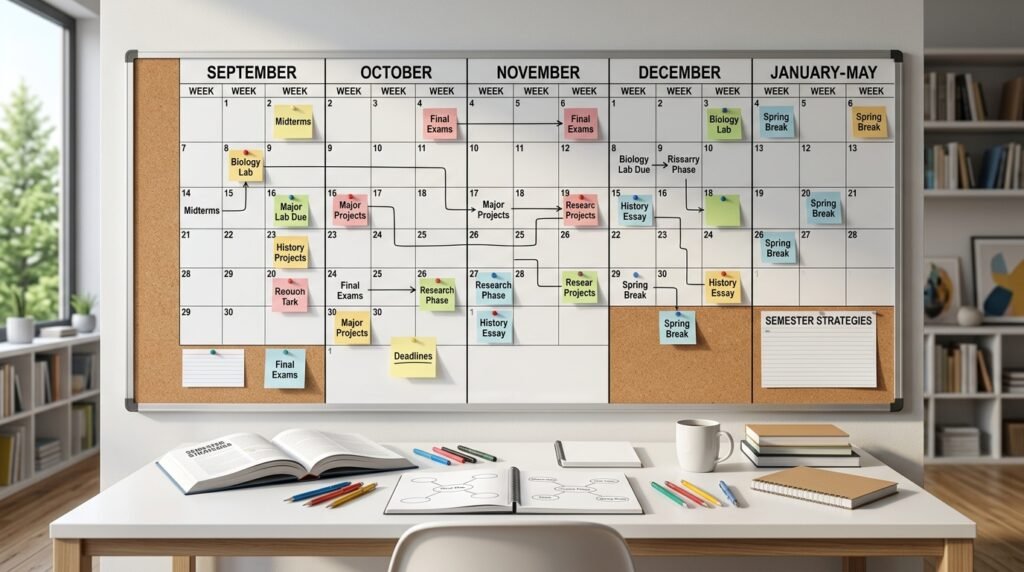
Before planning each day, start with the big picture. Student success often depends on seeing what is coming weeks or months ahead.
At the beginning of a semester, quarter, or school year, gather your syllabi, class schedules, sports schedules, work shifts, exam dates, project deadlines, school events, and personal commitments. Add the most important dates to the monthly section of your planner.
This includes tests, quizzes, essays, presentations, lab reports, application deadlines, scholarship deadlines, club events, family events, and major school activities. If you are in college, include midterms, finals, registration dates, financial aid deadlines, and breaks. If you are in high school, include standardized test dates, college application deadlines, sports tournaments, and major assignments.
Seeing the big picture helps you avoid surprises. If you notice that three exams and a paper are due in the same week, you can begin preparing earlier. If you see a busy sports season coming up, you can plan ahead for heavier academic weeks. If you know you will be traveling or working extra hours, you can adjust your study schedule before stress builds.
The monthly view is not where you plan every detail. It is where you track major events and deadlines. Think of it as the map of your academic life.
Use Weekly Planning to Stay in Control
Once your big-picture dates are in place, weekly planning becomes the core of your planner system. A weekly plan helps you turn large goals into realistic actions.
Set aside a short time each week to plan. Sunday evening works well for many students, but any consistent time can work. During this weekly planning session, look at the week ahead and ask yourself what needs to be completed, what needs to be started, and what might create stress if ignored.
Write down homework assignments, reading tasks, study sessions, project steps, club meetings, practices, work shifts, and personal commitments. Then decide when each task will happen.
This is where many students make a mistake. They write a long list of everything they need to do, but they do not assign tasks to specific days. A list is helpful, but a scheduled plan is stronger. If your planner says “study biology,” that is a reminder. If it says “Tuesday, 6:30 p.m. to 7:15 p.m., review biology Chapter 4 notes,” that is a plan.
Weekly planning also helps you balance your workload. If Monday is already packed with school, work, and practice, do not overload it with three hours of homework. Move some tasks to another day. If Wednesday is lighter, use it for deeper study or project work.
A planner should help you make realistic choices. It should not make every day feel impossible.

Plan Your Day With Clear Priorities
Daily planning gives your week structure. It helps you decide what matters most right now.
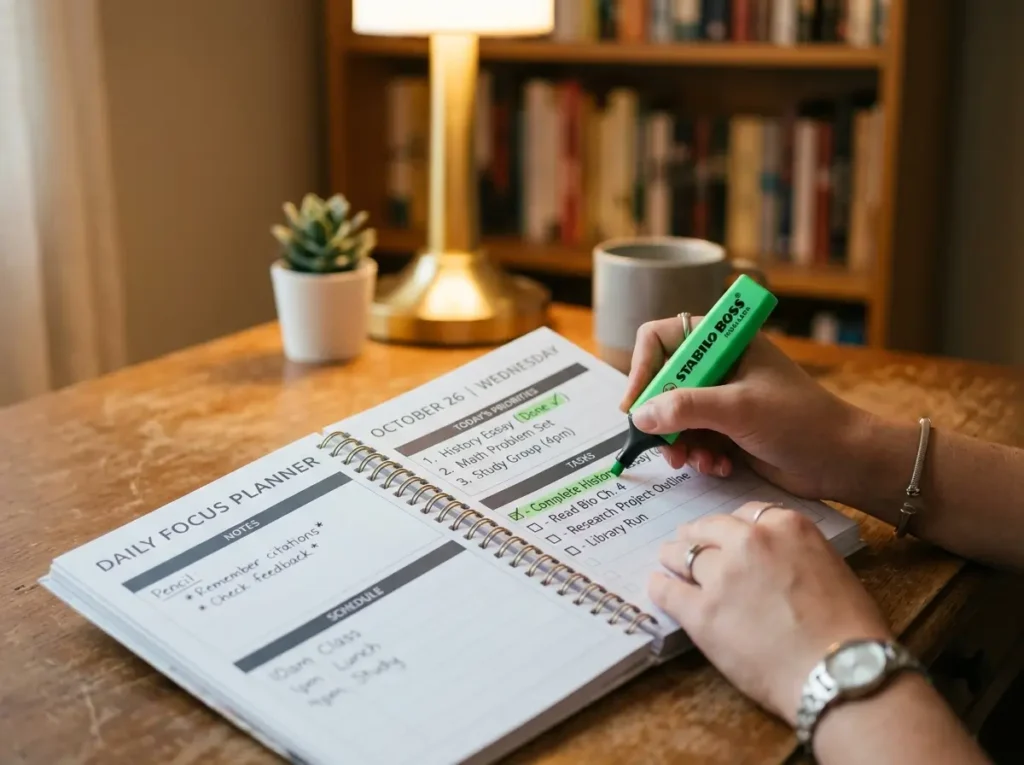
Each morning or the night before, look at your planner and choose your top priorities for the day. These should be the tasks that matter most for your academic progress or personal responsibilities. Some days, your priority may be finishing an essay. Other days, it may be studying for a test, emailing a teacher, completing math homework, or attending a meeting.
A common mistake is trying to treat every task as equally urgent. When everything feels important, it becomes harder to start. A planner helps you separate must-do tasks from can-do tasks.
For example, if you have five tasks written down, identify the two that absolutely need to happen today. Once those are complete, you can move to the others. This simple habit can reduce stress and improve productivity.
Daily planning should be short and practical. You do not need to plan every minute. You only need to know what needs your attention and when you will work on it.
Write Assignments Down Immediately
One of the easiest ways to improve your planner routine is to write assignments down as soon as you receive them. Do not wait until later. Later is when things get forgotten.
When a teacher, professor, or online course platform gives you a deadline, write it in your planner right away. Include the subject, assignment name, due date, and any important details. Instead of writing “essay,” write “English essay draft due Friday.” Instead of writing “test,” write “Algebra test: quadratic equations, Thursday.”
Specific details make your planner more useful when you review it later.
If you are using a digital planner, enter the deadline immediately and set a reminder. If you are using a paper planner, keep it with you during class or update it right after class. If you cannot write everything down in the moment, make a quick note on your phone and transfer it to your planner later that day.
The habit of writing things down immediately protects you from last-minute panic. It also helps you build trust in your planner. When your planner contains accurate information, you are more likely to use it consistently.
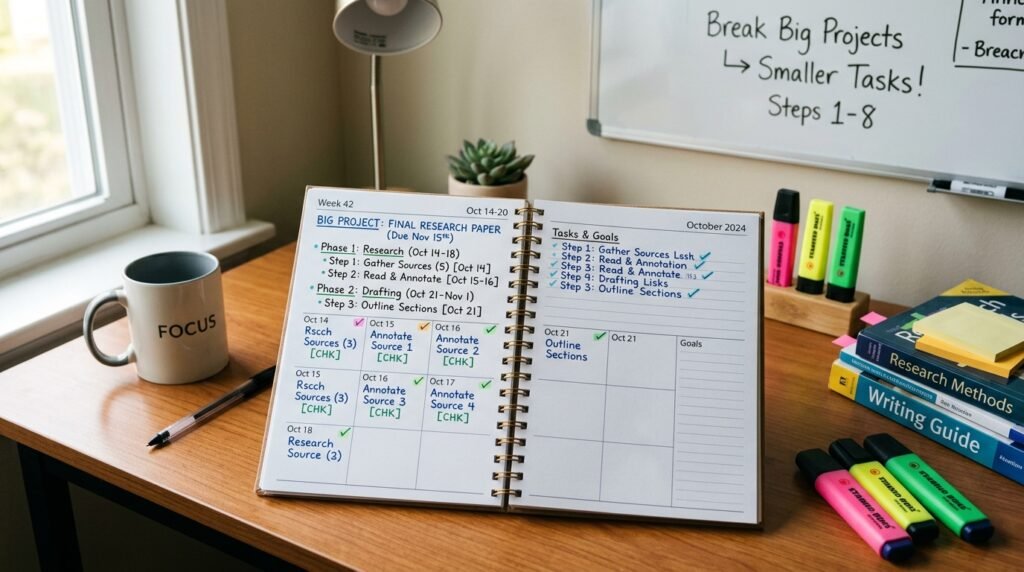
Break Big Projects Into Smaller Planner Tasks
Large assignments can feel overwhelming when they appear as one big deadline. A research paper due in three weeks may seem far away until suddenly it is due tomorrow. A group project may feel manageable until everyone realizes there are too many pieces left unfinished.
Your planner can prevent this by breaking big projects into smaller steps.
Instead of writing only the final due date, plan the process. For a research paper, you might schedule time to choose a topic, gather sources, create an outline, write the introduction, draft body paragraphs, revise, proofread, and submit. For a presentation, you might plan time to research, create slides, practice speaking, and prepare notes.
This approach works because it turns a stressful project into a series of manageable actions. Each step feels easier to complete, and you make progress before the deadline becomes urgent.
Breaking tasks down is especially helpful for students with busy schedules. If you have school during the day, practice in the afternoon, and work on weekends, you may not have one long block of time for a project. Smaller planner tasks let you make steady progress in shorter sessions.
A planner is not just for recording deadlines. It is for creating a path to meet those deadlines successfully.
Use Time Blocking for Study Sessions
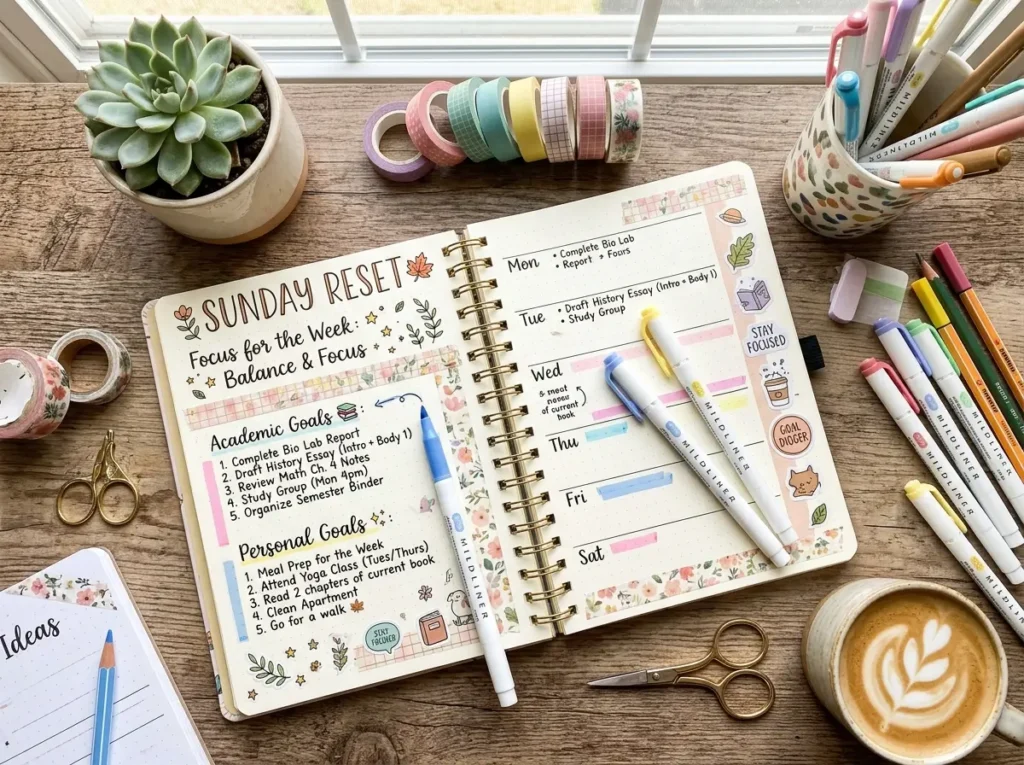
Time blocking means setting aside a specific block of time for a specific task. It is one of the most effective ways to use a planner for student life success.
Instead of hoping you will study sometime after school, you schedule the study session. For example, you might write “4:30 p.m. to 5:15 p.m., review chemistry notes” or “7:00 p.m. to 7:45 p.m., complete history reading.”
Time blocking helps because it gives your tasks a place in your day. It also helps you see whether your plan is realistic. If your planner is filled from morning to night with no breaks, you can adjust before burnout happens.
Students should use time blocking for homework, studying, reading, essay writing, test prep, college applications, and even rest. Planning breaks may sound unnecessary, but it reminds you that rest is part of a healthy schedule.
Time blocks do not need to be long. In fact, shorter focused sessions often work better than marathon study sessions. A 25-minute review can be powerful when you know exactly what you are trying to accomplish. A 45-minute writing block can help you move an essay forward. A one-hour weekend session can help you prepare for the week ahead.
The goal is not to fill every free hour. The goal is to use your time intentionally.
Include Study Time Before You Feel Behind
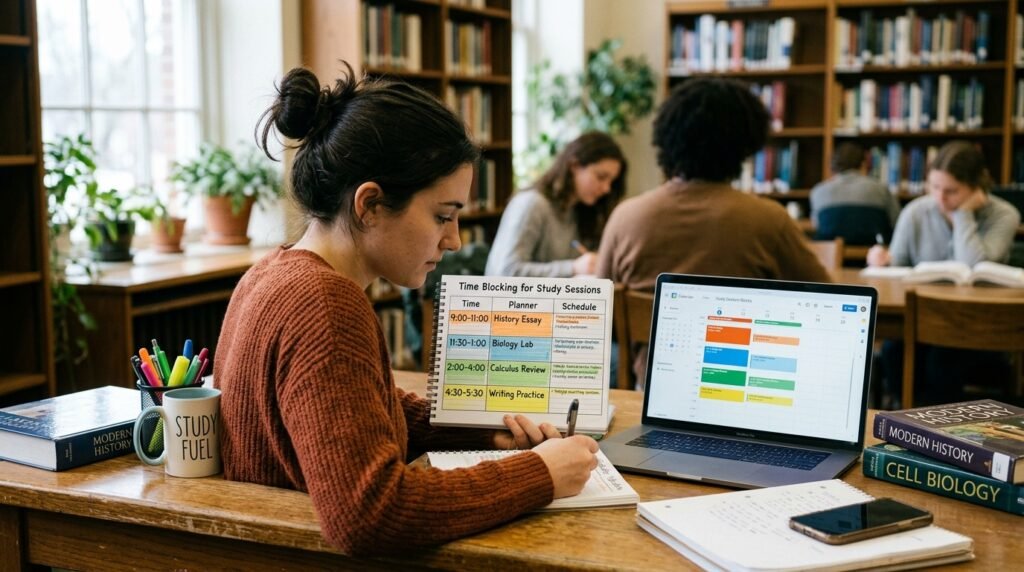
Many students only write homework deadlines in their planners. That is a good start, but it is not enough. A planner should also include study time.
Homework and studying are not always the same thing. Homework is usually assigned and graded. Studying is the review, practice, and preparation that helps you understand the material and perform well on quizzes, tests, exams, and class discussions.
If you only study when a test is announced, you may end up cramming. A better strategy is to schedule regular review time before you feel behind.
For example, after a math lesson, schedule time to complete a few extra practice problems. After a history lecture, review your notes and summarize the main ideas. After a science class, redraw a diagram or explain the concept in your own words. After reading a chapter, write down key terms or questions.
Adding study time to your planner helps you stay ahead. It also makes exam preparation less stressful because you are not starting from zero.
Students who use planners successfully do not just track what is due. They plan how to learn.

Color-Code Without Overcomplicating
Color-coding can make your planner easier to read, but it should stay simple. Some students love using different colors for each subject, activity, or priority level. Others find too many colors distracting.
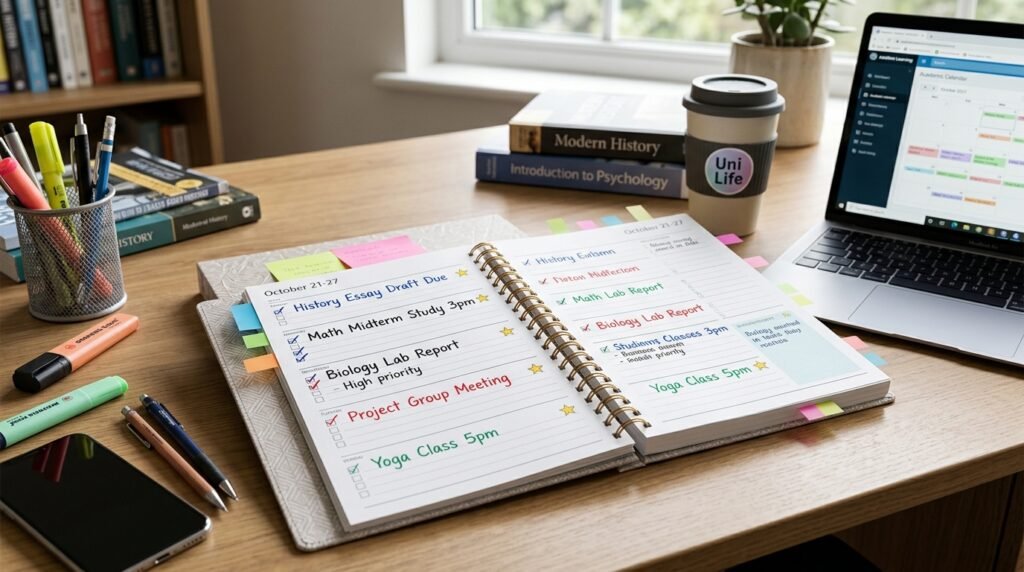
A simple color system can help you quickly understand your schedule. You might use one color for school assignments, one for exams, one for extracurriculars, one for work, and one for personal plans. Or you might use different colors for each class.
The key is consistency. If blue means math this week, it should mean math next week too. If red means urgent deadlines, use it only for truly important items.
Avoid spending more time decorating your planner than using it. A beautiful planner is nice, but a useful planner is better. The purpose of color-coding is to help your brain quickly notice patterns, deadlines, and priorities.
If color helps you stay engaged, use it. If it feels like extra work, keep your planner simple. Success comes from consistency, not decoration.
Use Your Planner to Balance School and Life
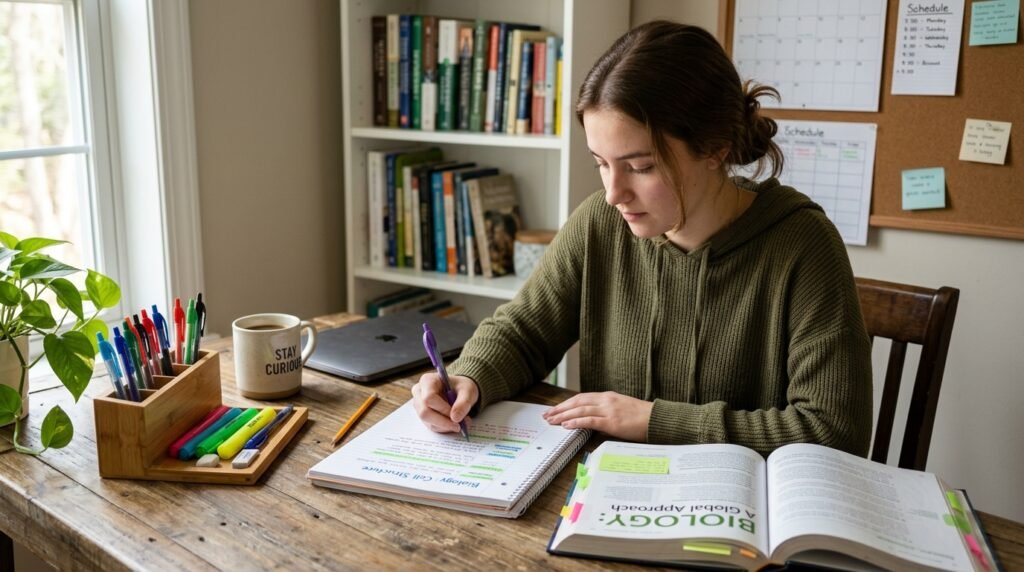
Student life success is not only about grades. It is also about balance. A planner can help you manage academics while still making time for health, relationships, hobbies, and rest.
Many students overestimate how much time they have. They plan homework, studying, and activities but forget meals, sleep, transportation, family responsibilities, exercise, and downtime. This creates a schedule that looks productive but feels impossible.
A realistic planner includes your whole life.
Write down practices, club meetings, work shifts, appointments, family events, and social plans. Include time for meals and breaks. If you know you need downtime after school, plan for it. If you know Sunday evenings are family time, do not schedule heavy study blocks then.
This does not mean you should avoid hard work. It means your planner should reflect reality. When you see your full schedule, you can make better choices about when to study, when to rest, and when to say no.
A balanced planner helps prevent burnout. It reminds you that being a successful student includes taking care of yourself.

Review Your Planner Every Day
A planner only works if you look at it. Writing things down is helpful, but checking your planner regularly is what turns it into a system.
Build the habit of reviewing your planner at least once a day. Many students find it helpful to check it in the morning and again at night. In the morning, you can see what needs to happen that day. At night, you can cross off completed tasks, move unfinished items, and prepare for tomorrow.
This daily review does not need to take long. Even five minutes can help you stay organized.
When you review your planner, ask yourself what is due soon, what needs attention, what can wait, and what needs to be adjusted. If you missed a task, do not ignore it. Move it to another realistic time. If a deadline changed, update it. If a new responsibility appears, add it.
Your planner should be a living tool. It changes as your life changes.
Make Room for Flexibility
No planner will go exactly as written. Classes change, assignments take longer than expected, technology fails, family plans shift, and energy levels vary. This is normal.
A good planner system includes flexibility. If your schedule is too packed, one unexpected event can ruin the whole day. Leave open space when possible. Build in buffer time before major deadlines. Avoid planning every hour so tightly that you have no room to adjust.
Flexibility also helps you stay motivated. If you miss one study session, that does not mean your planner failed. It means you need to reschedule. The goal is not perfection. The goal is progress.
Students sometimes abandon planners because they fall behind and feel guilty. Do not let that happen. Your planner is not there to judge you. It is there to help you reset.
If a week goes badly, turn the page and start again.

Use Your Planner for Goals, Not Just Tasks
A planner is useful for assignments, but it can also help you work toward bigger goals.
You might have a goal to raise your GPA, improve your writing, apply for scholarships, prepare for college, get better at time management, read more, exercise regularly, or reduce procrastination. These goals become more achievable when you connect them to planner actions.
For example, if your goal is to improve your grade in biology, write down weekly review sessions, practice quizzes, and office hours. If your goal is to apply for scholarships, schedule time to search, draft essays, request recommendations, and submit applications. If your goal is to improve your mental health, plan sleep routines, breaks, exercise, or screen-free time.
Goals feel less overwhelming when they become scheduled habits.
Your planner can also help you track progress. When you see repeated effort over time, you build confidence. Small actions become visible, and visible progress can keep you motivated.

Create a Planner Routine That Feels Easy
The most successful planner system is one you can maintain. If your routine takes too much time, you may stop using it.
Keep your planner routine simple. At the beginning of each month, add major deadlines and events. At the beginning of each week, plan assignments and study blocks. Each day, review priorities and update unfinished tasks.
That is enough.
You do not need complicated symbols, perfect handwriting, or a highly detailed layout. You only need a system that helps you know what to do and when to do it.
Make your planner easy to access. Keep a paper planner in your backpack or on your desk. Keep a digital planner on your phone or laptop home screen. The easier it is to open, the more likely you are to use it.
A planner should lower stress, not create another assignment.

Common Planner Mistakes Students Should Avoid
Even students who use planners sometimes struggle because their system is too vague or unrealistic.
One common mistake is writing only due dates without planning work time. Knowing that an essay is due Friday helps, but scheduling when to write it helps more.
Another mistake is overloading the planner. If every day is packed with too many tasks, you may feel defeated before you begin. It is better to plan fewer tasks and complete them than to create an impossible list.
Some students use planners only when they are already overwhelmed. A planner works best as a regular habit, not an emergency tool.
Another mistake is ignoring personal commitments. If you do not include work, sports, family responsibilities, or social plans, your planner will not show your real availability.
Finally, some students quit when they miss a few days. Remember, planner success is not about never falling behind. It is about knowing how to restart.

A Simple Student Planner Example
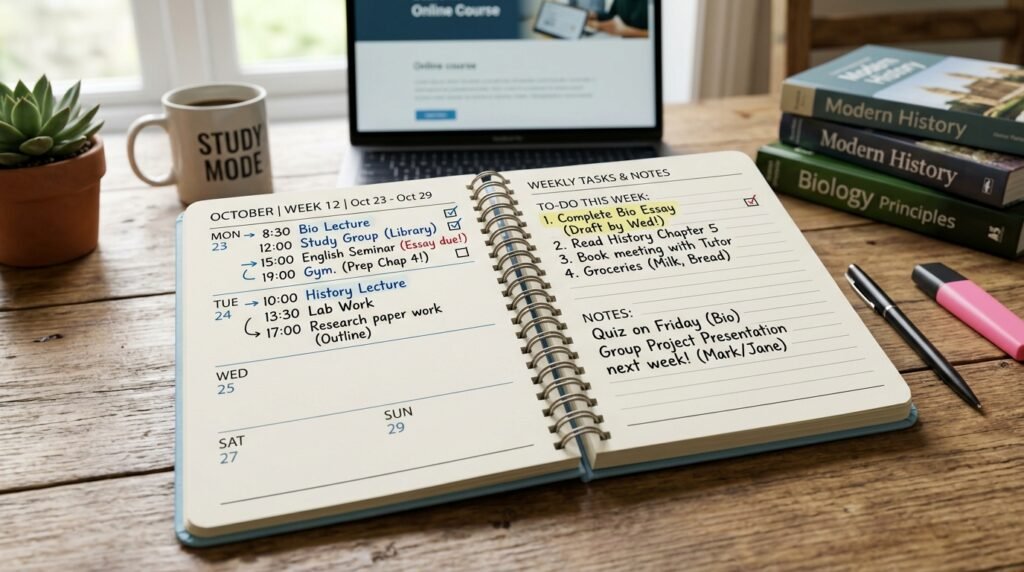
A realistic student planner might include a monthly page for major deadlines, a weekly page for assignments and activities, and a daily section for top priorities.
For example, on Sunday, a student might look at the week ahead and notice a math quiz on Wednesday, an English essay due Friday, soccer practice Monday and Thursday, and a part-time work shift Saturday. Instead of waiting until Thursday night to write the essay, the student schedules an outline on Monday, a rough draft on Tuesday, revision on Wednesday, and proofreading on Thursday.
The student also schedules two short math review sessions before the quiz. Because practice is already in the planner, studying becomes less stressful.
This type of planning does not make school easy, but it makes school more manageable. The student still has responsibilities, but now those responsibilities are organized into realistic steps.
That is the real power of a planner.
How a Planner Builds Long-Term Success
Using a planner helps with more than homework. It builds life skills that matter far beyond school.
Students who learn to plan are practicing responsibility, time management, self-discipline, prioritization, and problem-solving. These skills are useful in college, careers, relationships, finances, and personal goals.
A planner also helps students become more independent. Instead of depending on reminders from parents or teachers, you learn to manage your own schedule. This independence is especially important for college students, where professors may not remind you about every deadline and parents may not be there to check your assignments.
Planning also supports confidence. When you know what is coming, you feel more prepared. When you complete tasks on time, you build trust in yourself. When you make steady progress, school feels less overwhelming.
Student life success does not come from being perfect. It comes from developing systems that help you keep moving forward.

Final Thoughts
Learning how to use a planner for student life success is one of the simplest and most powerful habits a student can build. A planner helps you organize assignments, manage deadlines, schedule study time, balance responsibilities, and reduce stress.
Your planner does not need to be fancy. It does not need to look perfect. It only needs to help you stay organized and take action.
For students in the United States balancing school, activities, work, family, and future goals, a planner can become a personal success tool. It helps you stop guessing, stop cramming, and stop feeling constantly behind. Instead, you can move through student life with more clarity, confidence, and control.